If you have spent half a day in Chester, you have probably stood in the amphitheatre, read the board outside, and assumed that is the Roman bit done.
It is not.
Chester was one of the great legionary fortresses of Roman Britain, alongside places such as York and Caerleon, and the bones of it are still here. They are just easier to spot once you know what you are looking at.
This is a guide to Roman Chester, or Deva Victrix, for people who would like a bit more than the amphitheatre. Most of it is free to see from public streets, parks, walls, and museum spaces. A couple of places need checking before you go, because Chester enjoys hiding important archaeology behind doors, glass panels, and occasionally pub furniture.
The fortress covered roughly sixty acres. The streets you walk on now still follow much of the Roman pattern. Chester does not always shout about this, which is very Chester.
For a wider first visit to the city, read our first-time guide to Chester. If you want the wall route in proper detail, use the Chester city walls walking guide alongside this one.
If you want a more playful route through some of the same territory, The Deva 40 treasure hunt folds Roman remains, city gates, wall sections and old Chester details into a self-guided clue walk. It is broader than Roman Chester, but that is Chester for you: one minute hypocaust, next minute pub.
If you want a broader guided overview rather than a Roman-only route, The Heart of Chester Walking Tour is a better first step. Do that, then come back to this when you are ready to become mildly unbearable about fortress street grids.
A Quick History, Without the Gibberish
The Roman fortress at Chester was founded in the late first century AD, probably in the 70s, as the Roman army pushed north and west through Britain.
It was first associated with Legio II Adiutrix, and later became strongly linked with Legio XX Valeria Victrix, the Twentieth Legion, which remained connected with Chester for a long period. The Roman name was Deva, usually linked to the River Dee. The “Victrix” part comes from the title of the Twentieth Legion.
You may see the name written as Deva Victrix. The Romans pronounced the letter “v” more like a “w”, so it may have sounded closer to “Day-wa Wictrix”. This is not essential knowledge, but it does give you something mildly unbearable to say while walking round town.
The fortress had the standard Roman military layout: a rectangular shape with rounded corners, gates, internal streets, barracks, headquarters buildings, bathhouses, workshops, and all the usual machinery of a permanent legionary base.
The modern city still follows parts of that Roman skeleton. Eastgate Street, Watergate Street, Bridge Street, and Northgate Street broadly reflect the old Roman street grid. The crossing point near the High Cross is still the centre of Chester, which is the sort of thing that makes the city feel older than it admits.
The legion eventually left. The civilians stayed. Later, the Anglo-Saxons knew the place as a city of the legions, and the medieval city grew up on top of the Roman one. That is why so much of Deva is still under Chester. Every time someone digs a trench, there is always the faint possibility that Roman Chester will make itself awkward again.
The Roman Sites You Can Visit, in a Sensible Order
This is a walking loop starting from the High Cross and going roughly clockwise.
Allow about two hours if you are walking steadily. Allow longer if you stop for the museum, read every board, or get distracted by coffee, which is the correct way to visit Chester.
The High Cross
Start at the High Cross, where Bridge Street, Watergate Street, Eastgate Street, and Northgate Street meet.
This is still the heart of Chester, and it broadly matches the centre of the Roman fortress. The principia, or headquarters building, stood nearby. This would have been one of the most important buildings in Roman Deva, used for administration, records, standards, and military business.
A preserved Roman strongroom, or aerarium, is sometimes described as visible beneath glass at the rear of the Dublin Packet pub off Northgate Street.
Check with venue before relying on access. This is one of those very Chester things where something genuinely remarkable may be visible, but only if the building is open and access has not changed.
The Roman Gardens
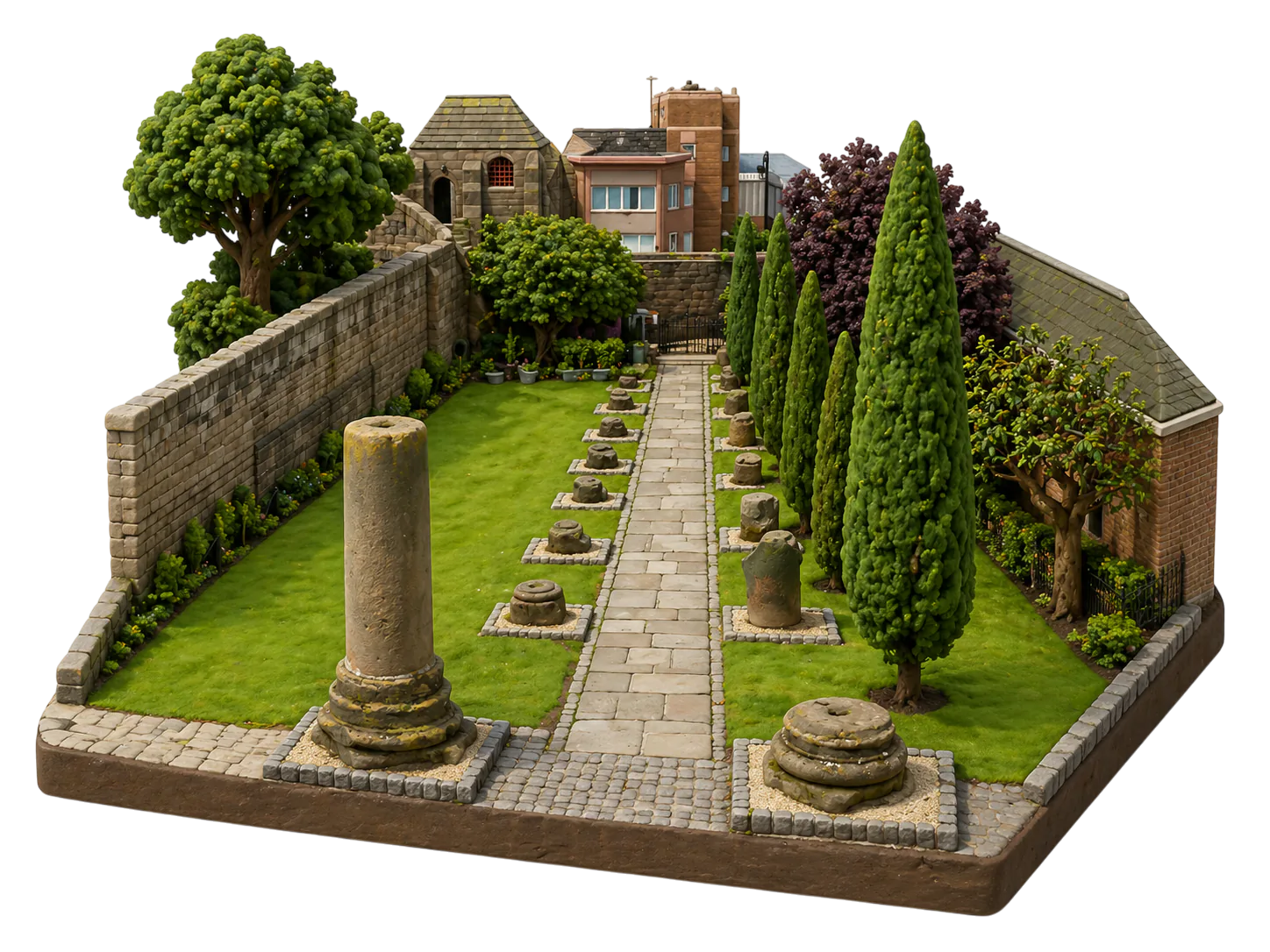
From the centre, head down towards Pepper Street and the city walls to find the Roman Gardens.
At first glance, this can look like a small municipal garden with bits of old stone arranged neatly for people to walk past while eating a sandwich. It is more interesting than that.
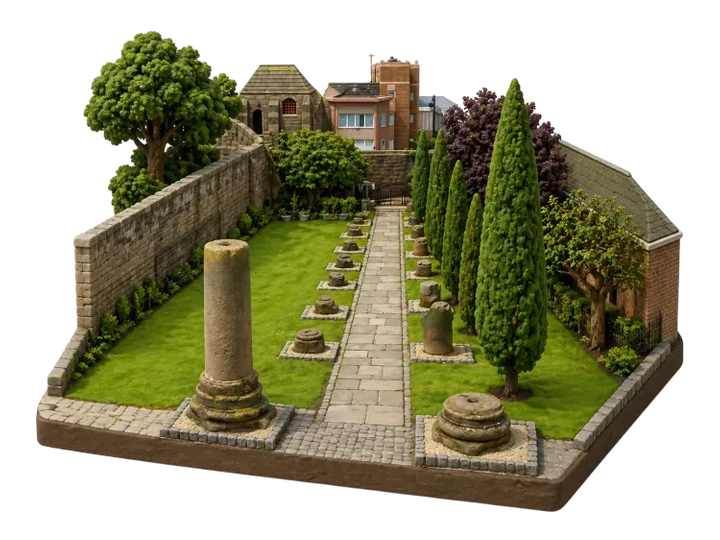
The Roman Gardens contain columns and stonework recovered from Roman sites in Chester, including material associated with the large Roman bathhouse on Bridge Street. There is also a reconstructed hypocaust, showing the Roman underfloor heating system, and a mosaic-style display.
The gardens are not a complete Roman building left exactly where it was found. They are a collection and display of Roman material from the city. That distinction matters. It is still worth seeing.
They also make a useful stop if you are walking between the amphitheatre, the walls, and the river.
Chester Roman Gardens — A useful stop between the amphitheatre, the walls, and the river.
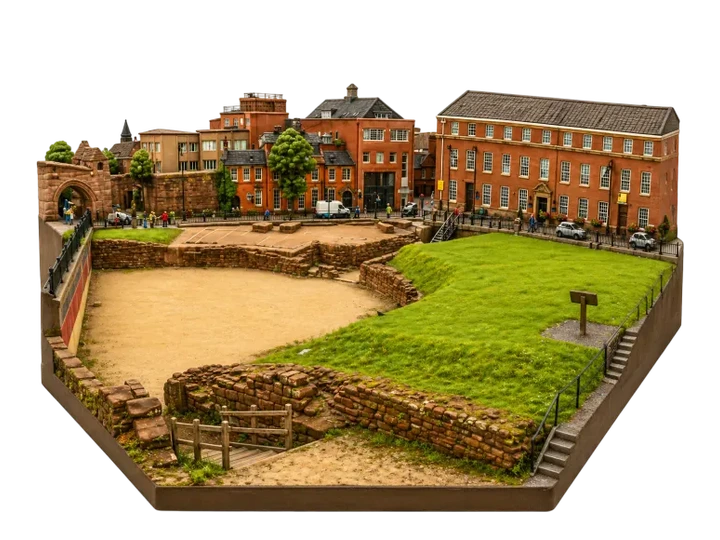
Chester Roman Amphitheatre
Yes, you should still see the amphitheatre.
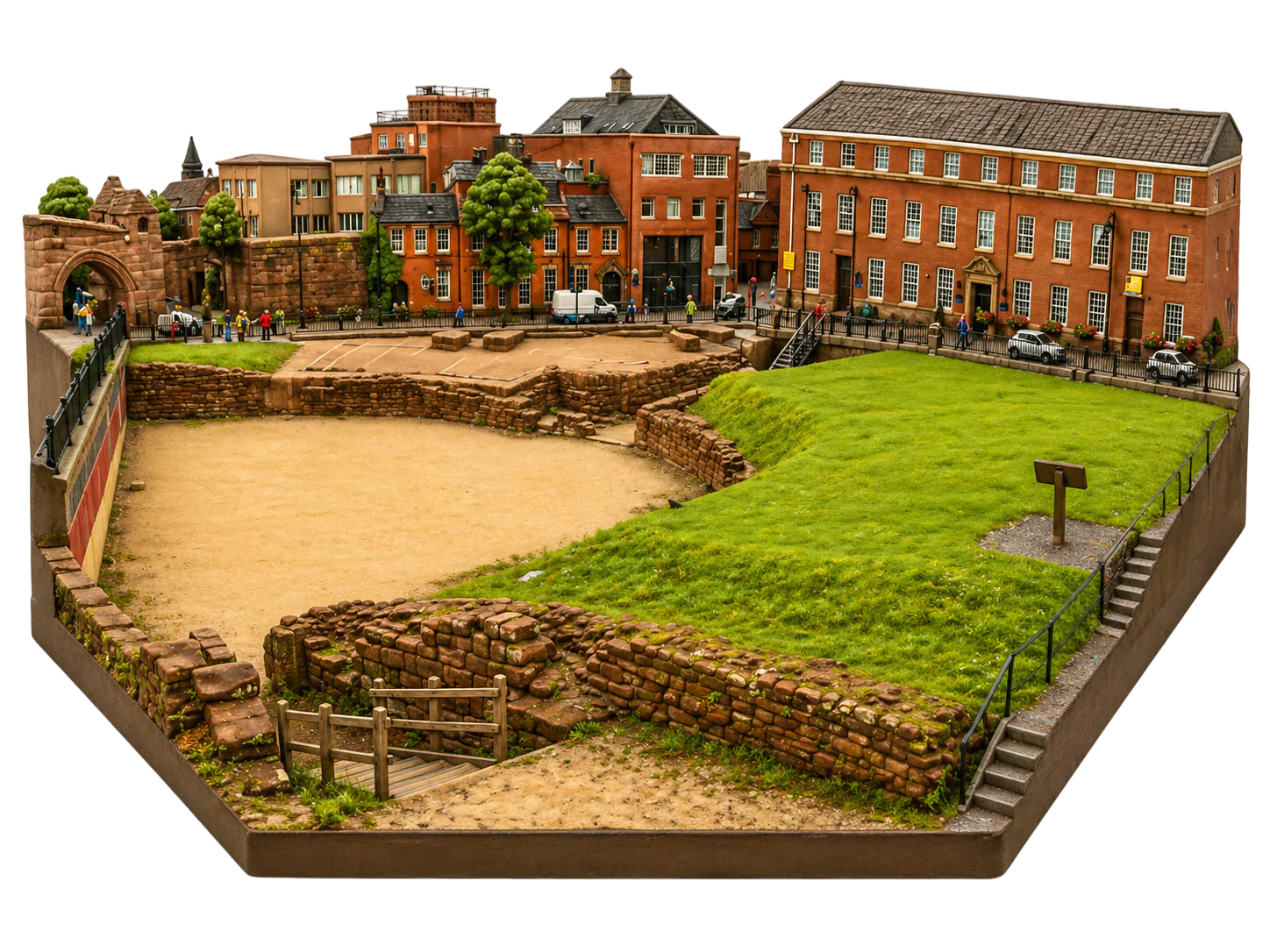
Chester Roman Amphitheatre is the best-known Roman site in the city, and with good reason. It is usually described as the largest Roman amphitheatre discovered in Britain, although only part of it has been fully excavated and presented.
The visible remains are free to view from the public area, but check current access before travelling, especially if you are making a special visit.
What most people miss is how much of the site is still hidden. Part of the amphitheatre remains beneath surrounding buildings and land, including the area around Dee House. That gives the place a slightly odd feeling: half ancient monument, half unresolved Chester planning argument.
Look for the surviving walls, the arena shape, and the interpretation boards. There is also a shrine to Nemesis associated with the amphitheatre. The original altar is held by the Grosvenor Museum.
Chester Roman Amphitheatre — Best combined with the Roman Gardens and the east side of the walls.
The City Walls
Chester’s city walls are mainly medieval in their current form, but they follow the line of the Roman fortress walls in places, and some lower sections include Roman masonry or sit on Roman foundations.
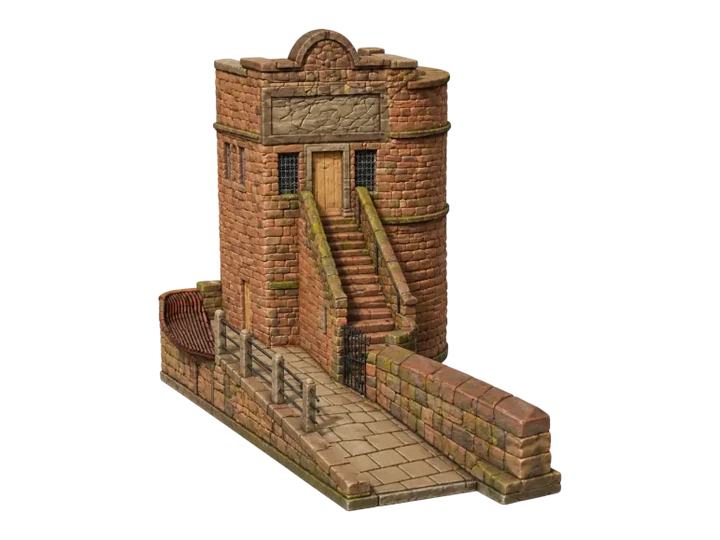
For the most useful Roman section, walk the walls around the north and east of the city, especially between Northgate, Eastgate, Newgate, and the area near King Charles’ Tower.
Look down at the stonework as you walk. In places, the lower masonry looks different from the later work above it. That is the point. Chester is layered rather than tidy.
The walls are one of the best ways to understand Roman Chester because they show the shape of the fortress more clearly than the modern streets do. They also give you a good route between the Roman sites without having to keep crossing traffic.
For the full circuit, use our Chester city walls walking guide.
Chester City Walls — The wall line helps you understand the shape of the Roman fortress.
Minerva’s Shrine, Edgar’s Field
This is the one many visitors miss, and it is one of the best Roman remains in Chester.
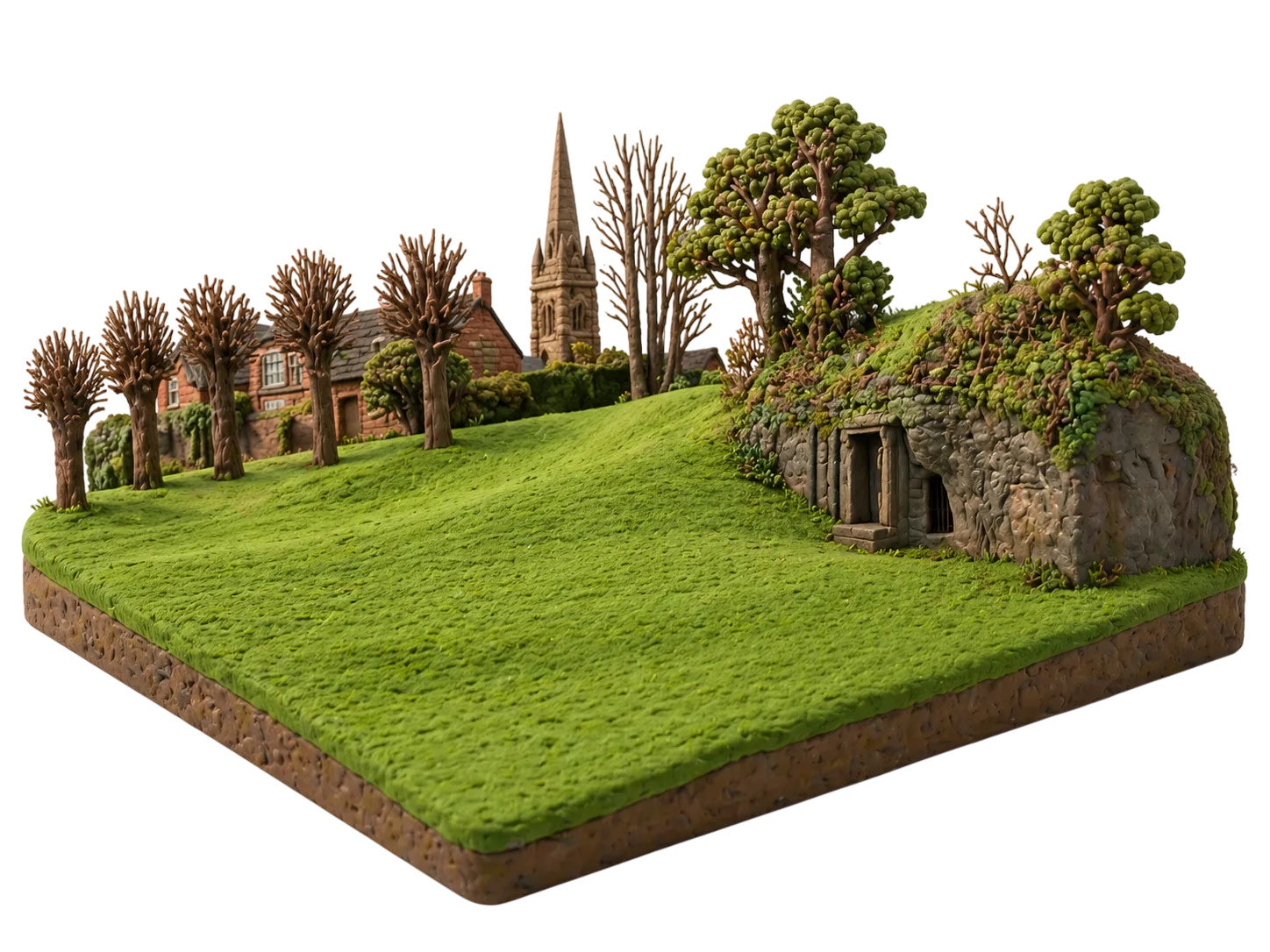
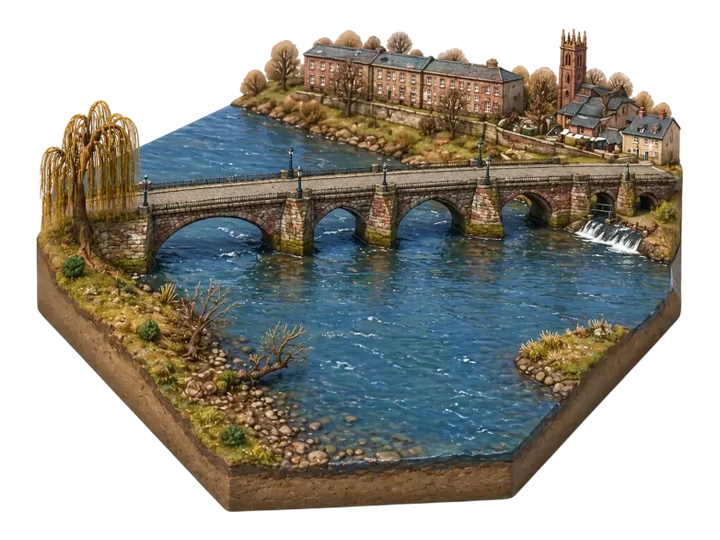
Cross the Old Dee Bridge from the city into Handbridge, then walk into Edgar’s Field. In the sandstone cliff face is a weathered carving of Minerva, the Roman goddess associated with wisdom, crafts, and protection.
The shrine is usually dated to the second century AD and is widely described as the only Roman rock-cut shrine still in its original location in Britain.
It was probably connected with the Roman quarrying activity in this area. The sandstone from around Handbridge was used in Roman Chester, including for major military buildings and defences.
It is free, outdoors, and easy to miss if you do not know it is there. That is part of the charm. Chester has put one of its most important Roman survivals in a park and then left you to get on with it.
Bridge Gate and Old Dee Bridge — Cross here for Minerva’s Shrine in Handbridge.
Edgar’s Field Park — The park hides one of Chester's best Roman survivals in plain sight.
The Grosvenor Museum
If you want to understand what has been dug up in Chester over the years, go to the Grosvenor Museum on Grosvenor Street.
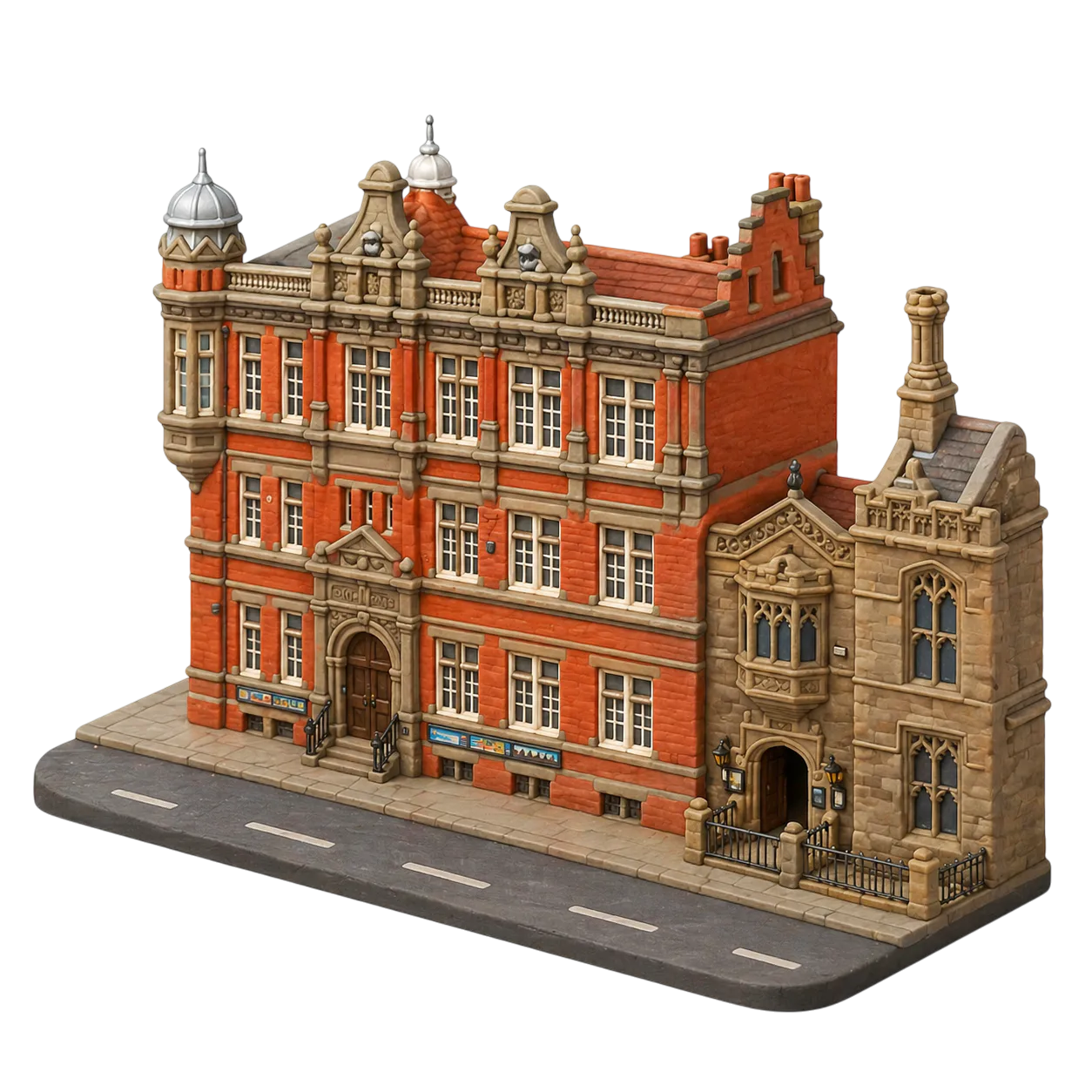
The museum has a major Roman collection, including tombstones, inscriptions, sculptures, building fragments, domestic objects, and material from the fortress and surrounding settlement.
The Roman tombstones are particularly worth seeing. Many were reused as building material in later walls, which accidentally helped preserve them. The inscriptions give you a much more human version of Roman Chester: soldiers, families, freed people, children, and people who lived here long before Chester had coffee chains and difficult parking.
Entry is usually free, but check current opening times before visiting.
If the weather turns grim, the museum also appears in our rainy day guide to Chester, because Roman tombstones are much better indoors than under sideways drizzle.
The Grosvenor Museum — Best for Roman tombstones, inscriptions, and finds from the city.
The Dewa Roman Experience
The Dewa Roman Experience is on Pierpoint Lane, close to the city centre.
It is a reconstructed Roman-themed attraction with displays based around life in Roman Chester, and it is particularly aimed at families, school groups, and children. It also includes archaeological remains beneath the building.
This is not a free public ruin like the amphitheatre or Minerva’s Shrine. Check current opening times, ticket prices, and booking details with the venue before visiting.
If you have children with you, it may be the most accessible way to make Roman Chester feel real. If you are travelling without children and only have limited time, the Grosvenor Museum may be the stronger stop.
Deva Roman Experience — Most useful for families who want Roman Chester made vivid rather than just described.
What Is Underneath Chester That You Cannot See
Roman Chester is not limited to what is visible above ground.
Much of Deva is still beneath the modern city. That includes parts of the fortress buildings, barracks, bathhouses, drains, streets, workshops, and civilian settlement outside the walls.
One of the most intriguing discoveries is the pair of so-called elliptical buildings, found beneath the area around the Forum and nearby streets. They appear to have been unusual oval courtyard structures with wedge-shaped rooms. Their purpose is still debated.
One theory links them to high-status administration, and some interpretations have suggested Chester may have been intended for a more important role in Roman Britain than it ultimately held. Treat that as an interesting theory rather than settled fact. Roman archaeology is very good at ruining a neat story.
The large Roman bathhouse lay beneath the Bridge Street area, including the area now occupied by shops. Roman activity also extended beyond the east gate, along the line of what is now Foregate Street.
It is safer to say that parts of Foregate Street follow the line of Roman activity outside the fortress, rather than claiming every modern shop sits directly on a Roman shopfront. The archaeology is richer than the slogan.
Roman Chester is not one neat attraction. It is a city underneath a city, with bits showing through wherever Chester has failed to pave over them properly.
A Sensible Roman Chester Walking Loop
Start at the High Cross.
Walk towards Northgate Street and, if access is available, check whether the Roman strongroom at the Dublin Packet can be seen.
Then get onto the city walls at Northgate and walk eastwards towards King Charles’ Tower and Newgate. From there, drop down to Chester Roman Amphitheatre.
After the amphitheatre, walk through the Roman Gardens, then continue towards the river. Cross the Old Dee Bridge into Handbridge and visit Minerva’s Shrine in Edgar’s Field.
Come back across the bridge and finish at the Grosvenor Museum, where the artefacts help make sense of what you have just walked past.
That gives you a compact Roman Chester route with walls, ruins, museum pieces, a shrine, a river crossing, and only a moderate risk of accidentally doing some learning.
How Long Does It Take?
Allow around two hours for the walking route.
Allow three hours or more if you want to spend proper time in the Grosvenor Museum or add the Dewa Roman Experience.
Most outdoor sites are free to view, but check opening times and prices for indoor venues before travelling.
Frequently Asked Questions
What was the Roman name for Chester?
The Roman name for Chester was Deva, often written as Deva Victrix. The name is linked to the River Dee, while “Victrix” comes from the title of Legio XX Valeria Victrix, the Twentieth Legion.
Is Chester Roman Amphitheatre free to visit?
The visible remains of Chester Roman Amphitheatre are usually free to view from the public area. Check current access before travelling, especially if you are making a special journey.
Where can you see Roman remains in Chester?
The main places to see Roman Chester are the Roman Amphitheatre, the Roman Gardens, the city walls, Minerva’s Shrine in Edgar’s Field, and the Grosvenor Museum. The Dewa Roman Experience is also useful, especially for families, but check current prices and opening times.
What is Minerva’s Shrine in Chester?
Minerva’s Shrine is a Roman rock-cut shrine carved into the sandstone in Edgar’s Field, Handbridge. It is usually dated to the second century AD and is widely described as the only Roman rock-cut shrine still in its original location in Britain.
Was Chester an important Roman city?
Yes. Chester was one of Roman Britain’s major legionary fortresses. It was a military base rather than a normal Roman town at first, and much of the modern city still follows the shape and street pattern of the fortress.
How big was Roman Chester?
The legionary fortress covered roughly sixty acres. The wider Roman settlement extended beyond the fortress walls, especially around the east side of the city near modern Foregate Street.
Can you walk around Roman Chester?
Yes. A Roman Chester walking route is one of the best ways to understand the city. Start at the High Cross, walk the walls, visit the amphitheatre and Roman Gardens, cross to Minerva’s Shrine, and finish at the Grosvenor Museum.