
In a paragraph
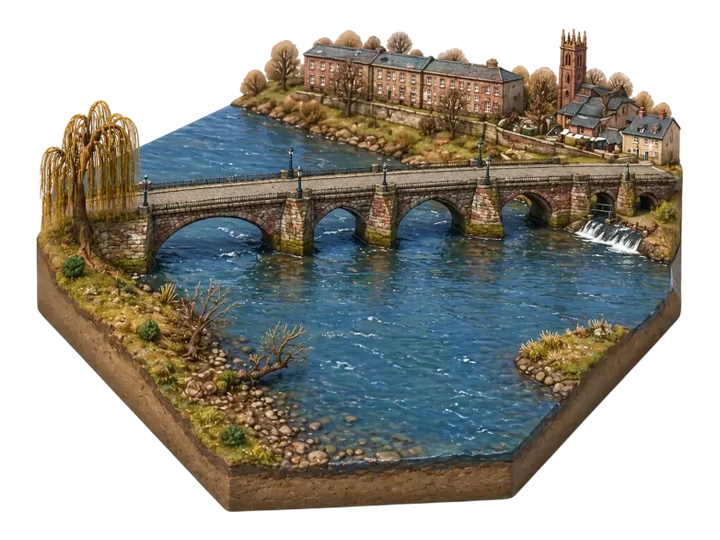
Bridge Gate and Old Dee Bridge is the historic river crossing at the south edge of Chester, where the City Walls, the Dee, the weir and the route into Handbridge meet.
What it's like
This is one of those Chester places that is more useful when you stop calling it an attraction and start using it properly. The bridge still carries traffic, the weir is loud, the sandstone is doing its job, and the city suddenly makes sense as a river crossing rather than just a shopping centre with old bits attached.
Short stop, strong Chester views
It works best as a hinge. Come down from the Roman Gardens or the walls, cross towards Handbridge, loop to Edgar's Field or the Meadows, then come back by the river. Ten minutes is enough if you are passing; longer if the light is good and nobody is rushing you.
Worth knowing
Do not oversell this as a day out. It is a very good Chester moment: old bridge, gate, river and route logic in one place. Use it as part of a walk and it earns its keep.
The essentialsVisit
Getting there
0.3 miles from The Cross.
Hours
Open 24 hours. Check the venue directly before making a special trip.
Food & drink
No food here. Use The Groves, Handbridge pubs/cafes or city-centre stops before or after.
Access
Pavements, roads, wall steps and riverside routes vary. Use the lower pavements and river paths if steps are a problem.


 8.9 OpenStreetMap
 - Hours
- Open 24 hours. Check direct before making a special trip.
- Address
- River Dee, Chester CH4 7JB
- Access
- Pavements, roads, wall steps and riverside routes vary. Use the lower pavements and river paths if steps are a problem.
- Getting there
- 0.3 miles from The Cross.
Nearby plan
Riverside loop
- ChesterBoat
- River Dee
- Edgar's Field Park
- Chester Meadows
Historic route
Food and drink nearby
FAQ
Is Old Dee Bridge free to visit?
Yes. It is a public road bridge and outdoor historic stop, with no ticket or booking.
Is Old Dee Bridge listed?
Yes. Historic England lists Old Dee Bridge as a Grade I listed building.
How long do you need?
Allow five to 20 minutes as a stop, or longer if you are using it as part of a riverside or City Walls walk.
Is it good for children?
Yes as a quick stop, but supervise carefully near traffic, the bridge edge, steps and the river.
What should you combine it with?
The Groves, ChesterBoat, Roman Gardens, City Walls, Edgar's Field and the Meadows all fit naturally.