Best for
Couples, families, friends, teams, work socials, visiting relatives and anyone who thinks walking is improved by mild suspicion.
A self-guided Chester walking treasure hunt through walls, gates, Roman remains, odd details and old shopfronts, ending with a historic reward.
Start at Chester Cross. Work through the clues in order, write your answers down, and collect the letters from the 10 key clues. The final code gives the historic building where your treasure waits.
Couples, families, friends, teams, work socials, visiting relatives and anyone who thinks walking is improved by mild suspicion.
A charged phone, comfortable shoes, a pen if printing, and a willingness to stare at signs like they owe you money.
The route uses the City Walls. Follow local diversion signs, avoid icy or very wet wall sections, and treat step-free access as limited.
Start at Chester Cross, where Eastgate Street, Watergate Street, Bridge Street and Northgate Street meet. Head east along Eastgate Street towards the famous clock over the gateway.
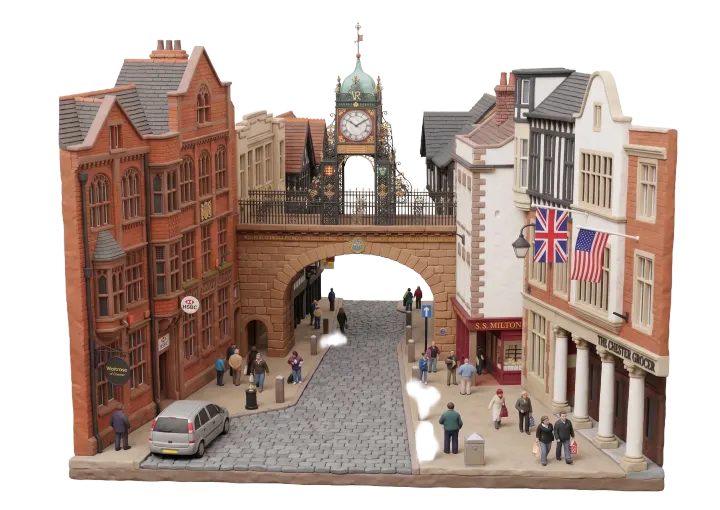
At the meeting of four old ways, a church keeps watch over the city middle. Find the saint who holds the keys.
Look at the church beside Chester Cross. The keys are the giveaway.
Chester does not shop on one level only. Look for the galleries above the street, where feet pass over windows.
Look above normal shop level. Chester has a second walking layer.
I wear a crown but never bow. I have four faces but no mouth. Above my face, two royal letters remember a queen.
Look above the clock face for the royal initials.
My year is broken in two, one half on the left, one half on the right.
The year is split across the clock decoration.
The clock is famous, but the gate is older. Which gate does it guard?
Name the gate the clock is sitting on.
Go up onto the City Walls at Eastgate Clock. Turn left/north, with the Cathedral side on your left. Continue along the wall to the corner tower overlooking the canal area.
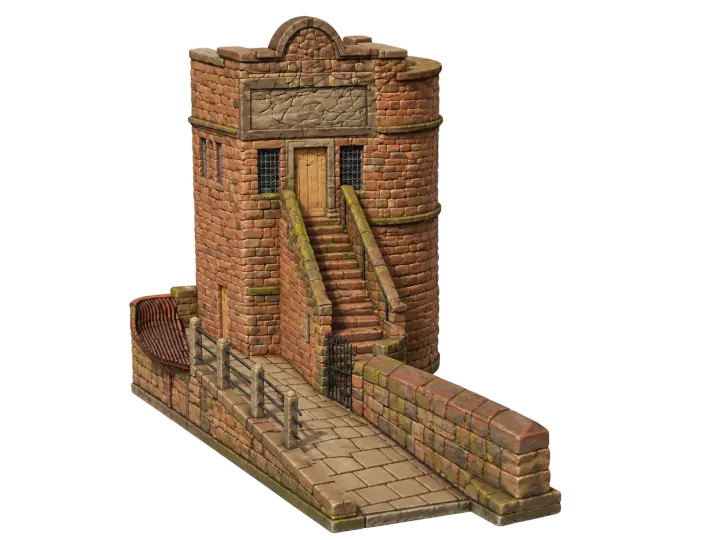
You are no longer on a street, yet you still walk around the city. What old defensive path carries your feet?
You have climbed from pavement to Chester defensive stonework.
Not for armies, carts or kings, but for monks and greens. A little bite through the wall led to the kitchen garden.
Look for the small gate linked to the Cathedral kitchen garden.
The king allowed the shortcut, but the city feared danger. When darkness came, what had to happen to the gate?
Think what a city would do with a risky gate after dark.
Most great church towers grow from the church. This one keeps its distance. Look towards the Cathedral and name the tower job.
Look towards the Cathedral, but away from the main building.
A royal watcher saw more than he wished. From this tower, a king is said to have watched his army lose hope on a moor.
This is the Civil War story attached to King Charles Tower.
From the Phoenix / King Charles Tower area, make your way down towards the canal and Upper Northgate Street. Follow any posted wall diversion signs. Aim for the canal bridge known as the Bridge of Sighs.
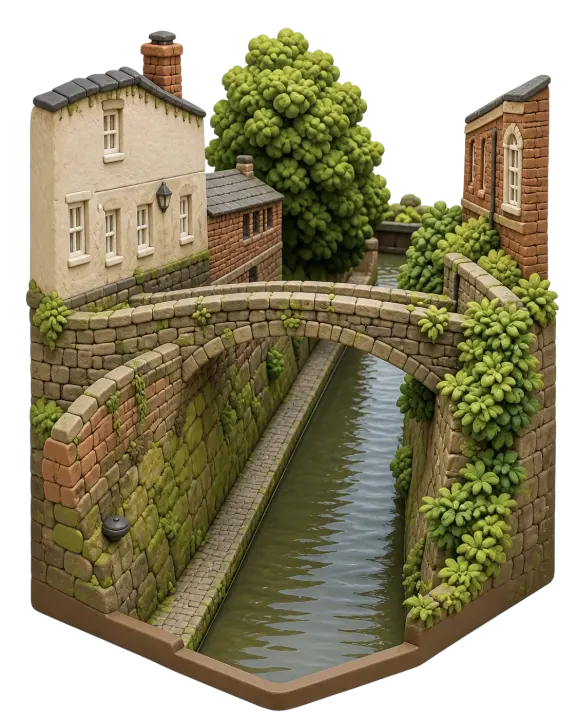
Water cuts through the city, but this is not the Dee. In the canal full name, find the word that means joined together.
The canal name contains a word meaning joined together.
Venice has one. Chester has one. But this sigh was not for love. Find the little crossing with the sorrowful name.
The name matches a famous bridge in Venice, but Chester used it differently.
The footsteps that crossed here came from a place of cells and sentences. Use the old four-letter spelling for a jail.
Use the old spelling, not the modern prison word.
Across the water stood a place where condemned men were taken before the rope. It shares its name with a colour and a coat.
Look for the old school name connected with the colour in the clue.
Leave the sighs behind. Find the city gate named for the top of the map.
Compass clue: top of the map.
From Northgate, head west towards Morgan Mount and the Water Tower section. Where wall access is open, use the walls; where it is diverted, follow the street-level signs and rejoin near Morgan Mount.
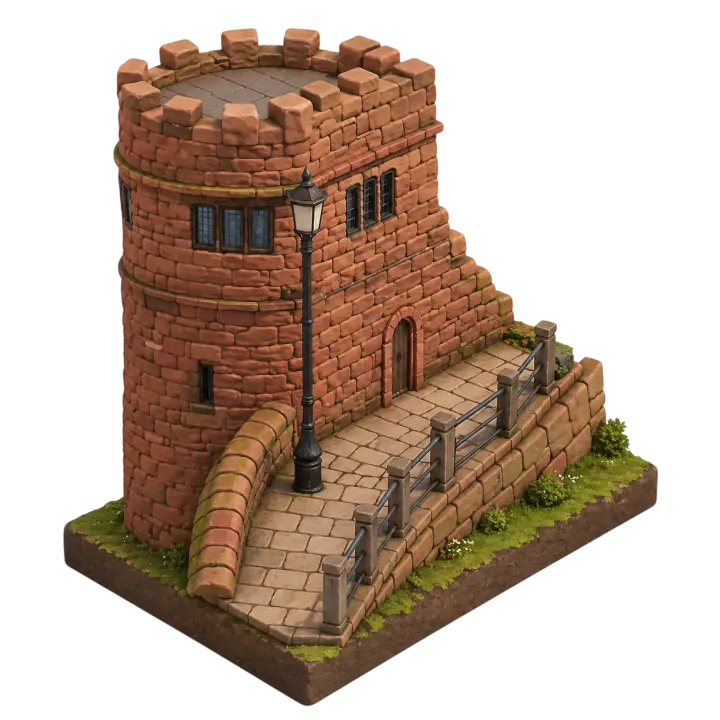
A defensive lookout, but it sounds like someone hill. What is the mount called?
The name sounds like a person plus a raised lookout.
Look at the walls beneath your hands. Chester old skin is warm-coloured stone. What colour is the sandstone?
Look at Chester sandstone rather than a painted surface.
Before the Water Tower, find the tower whose name looks as if several names fell into one.
Do not worry about perfect spelling. The sign is doing most of the work.
Not the main wall, but a smaller arm stretching away, as if trying to touch a river that moved.
It is the smaller wall that sticks out from the main circuit.
I was built for water, ships and watchmen. Now I stand inland, abandoned by the river.
The clue is very literal: a tower built for when water was closer.
When the Dee withdrew, this tower was left in a common phrase: not wet and useful, but...
Common phrase for something left away from water.
It gave Chester trade, danger and defence. It also left this tower stranded.
The same river you meet at The Groves and Old Dee Bridge.
Continue south along the wall towards Watergate and the open view of the racecourse. Carry on towards Bridgegate and drop down towards the river when the route allows.
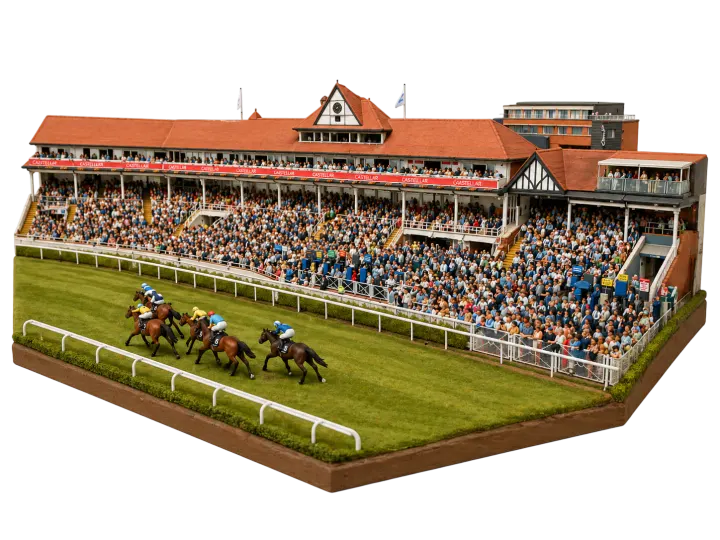
Its name remembers water, but today it opens to streets and racecourse views.
A gate named for water, even though the water has wandered off.
Below you lies a place of hooves, crowds and old open ground. Its name sounds short and strange.
The racecourse has a short local name, not just "Chester Racecourse".
No engines, no wheels, just speed, legs and thunder.
Listen for hooves rather than engines.
This gate gives a simple instruction: there is a bridge nearby.
This gate almost tells you there is a bridge.
Before modern roads and grander spans, this was the old way across the Dee.
Use the older Dee crossing, not the big Grosvenor Bridge.
Leave the stone and find the trees. Chester riverside promenade has a green-sounding name.
This riverside promenade is where boats, benches and ice cream tend to gather.
From the riverside, head towards the Roman Gardens near the walls and Little St John Street. Then walk the short distance to the Roman Amphitheatre.
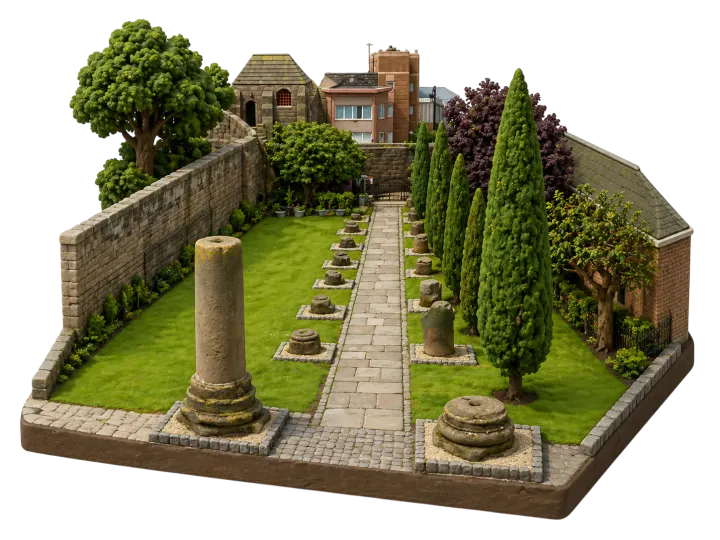
It sounds like a Roman pleasure garden, but really it gathers old stones, columns and fragments from across the city.
It is a garden full of Roman bits, not a Roman garden party.
Roman comfort did not always come from a fire you could see. The warmth crept from beneath the floor.
The heat comes from beneath you.
A grand old word for underfloor heating: half engineering, half archaeology.
Look for the Roman engineering word on signs nearby.
They stand in the garden like broken soldiers, but they once helped hold up Roman buildings.
Tall vertical stone pieces that once helped hold buildings up.
Not East, North, Water or Bridge. This gate sounds as if it arrived after the others.
Among Chester gates, this one sounds least ancient.
Soldiers trained here. Crowds gathered here. Only part of the great oval is awake.
The big Roman oval beside Little St John Street.
Chester Roman soldiers were not just any soldiers. Their number is written like two Xs, or spoken as a number.
Roman numerals help: two Xs.
Walk from the Amphitheatre towards St John the Baptist Church and its ruins. Then head back into the centre towards Bridge Street and find Three Old Arches at 48 Bridge Street.
Not Chester Cathedral, yet once a cathedral. Find the church of the Baptist.
It is the church of St John the...
Before the title moved elsewhere, this church held one of Chester grandest names.
The clue is asking for St John old status, not its current parish role.
Stone climbed too high, then came down. Find or solve the year of the Great West Tower collapse.
Look for the collapse date on St John information boards.
A Saxon king came to Chester in 973, linked by legend and history to the river and this church.
The Saxon king linked to Chester in 973.
Three old stone mouths, older than almost every shopfront memory. Find the arches that may hold a national first.
You are looking for the named Bridge Street building with three arches.
If you have the final code, open the reveal below. If you have not, this is your last polite warning from the pavement.
The final code points to Gamul House, now home to The Brewery Tap on Lower Bridge Street. It is a strong finish because it is not just a random pint: it is a properly atmospheric old building where the reward can be a drink, a meal and the quiet knowledge that your team only argued about clue 18 for seven minutes.