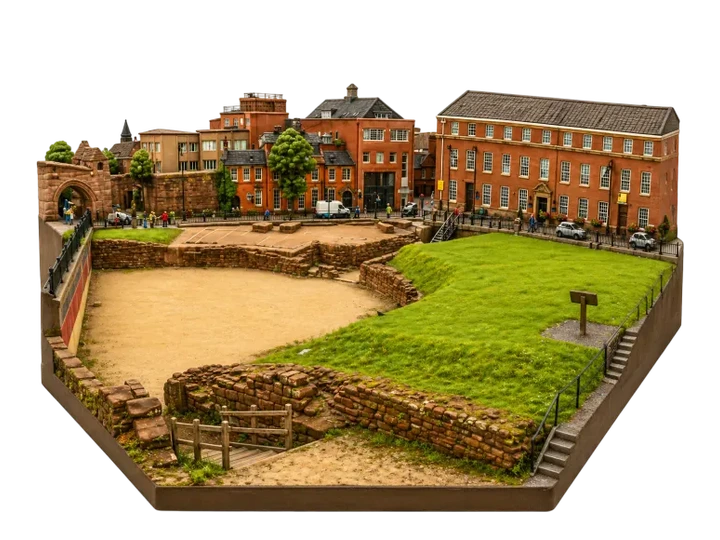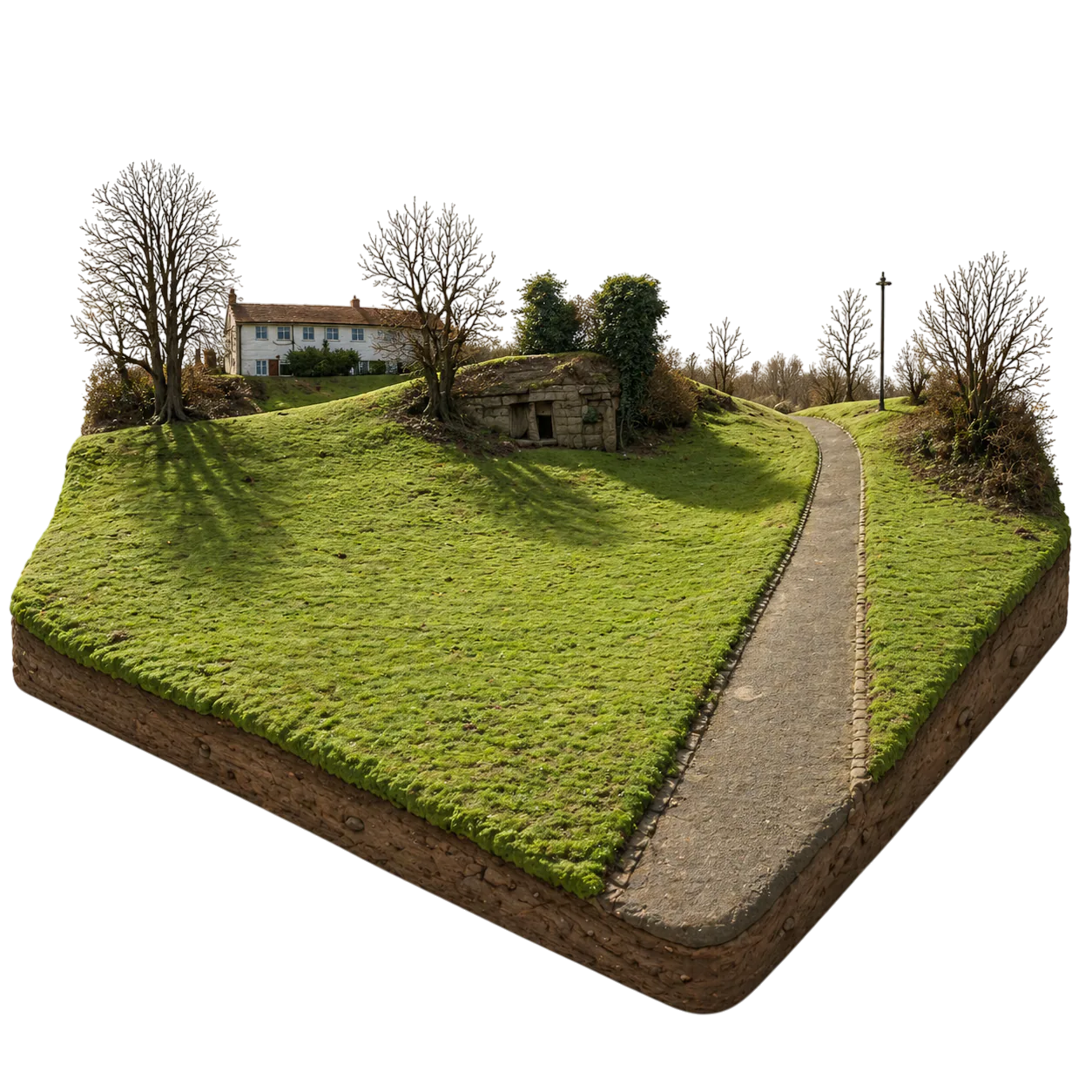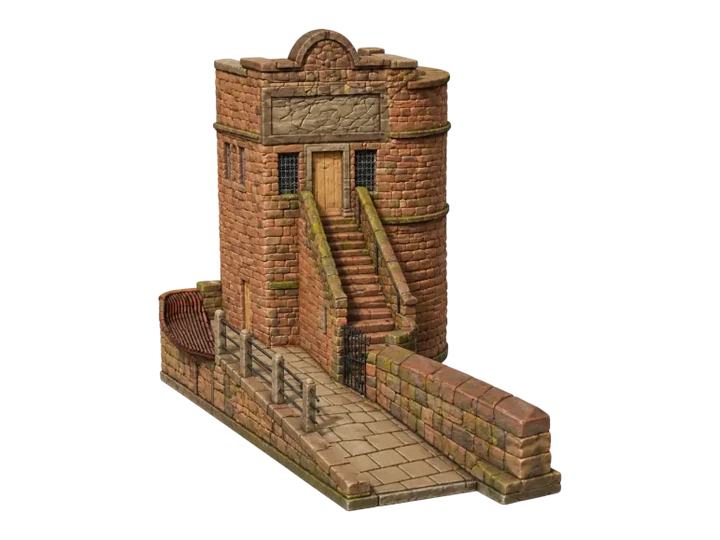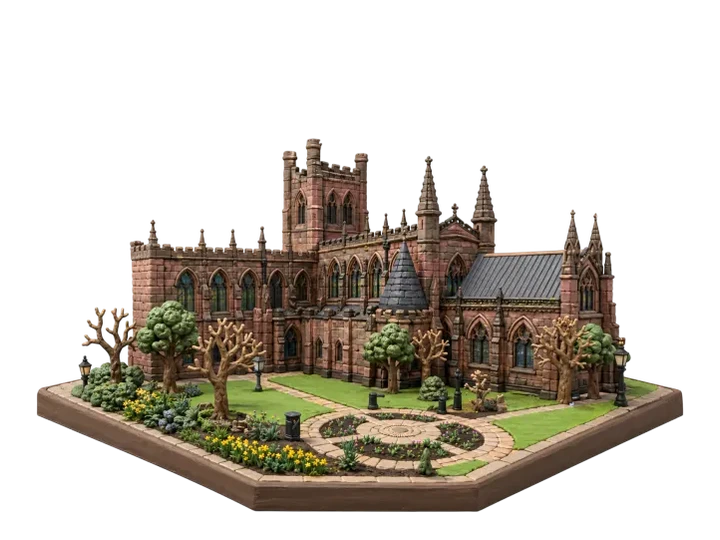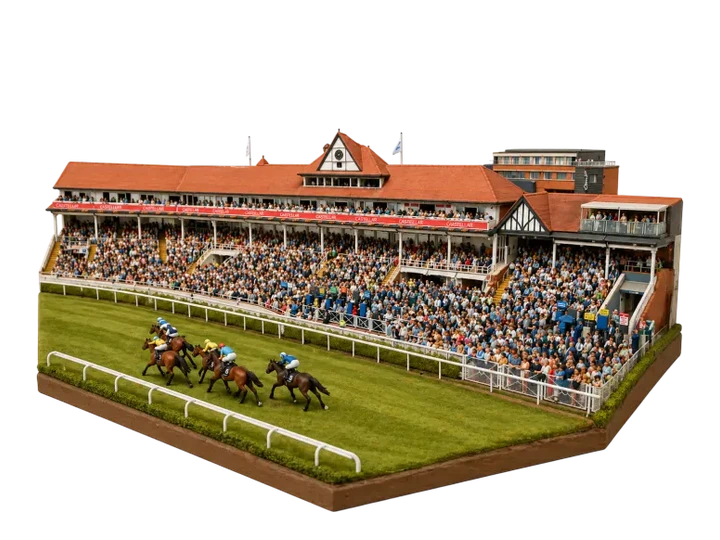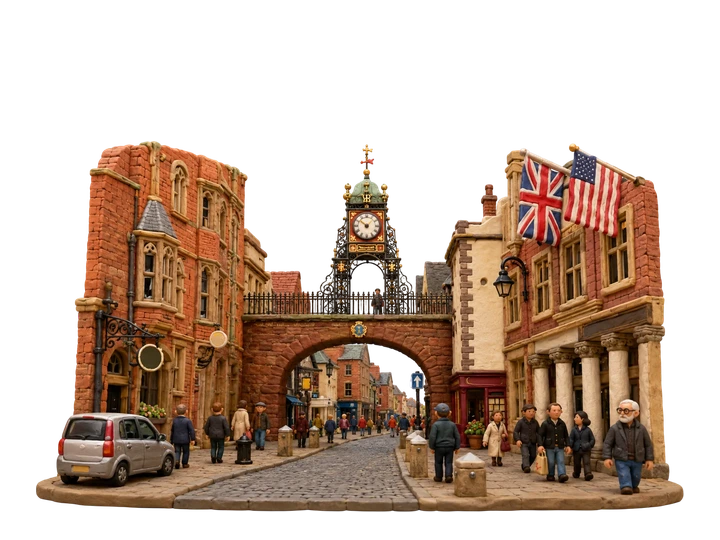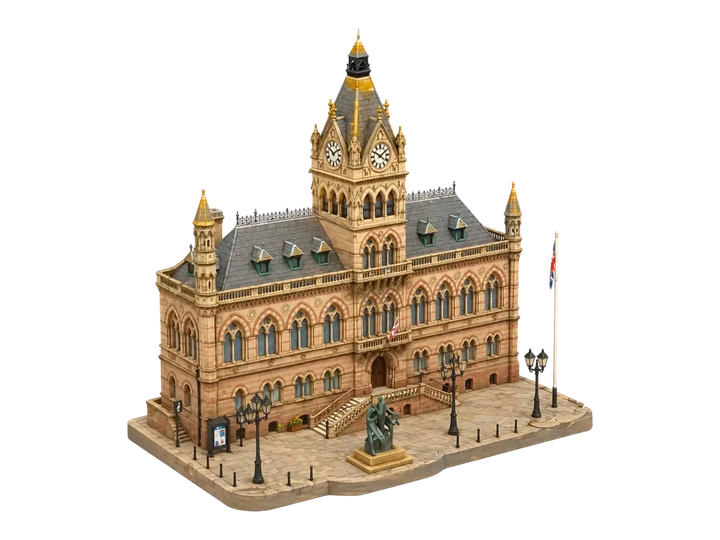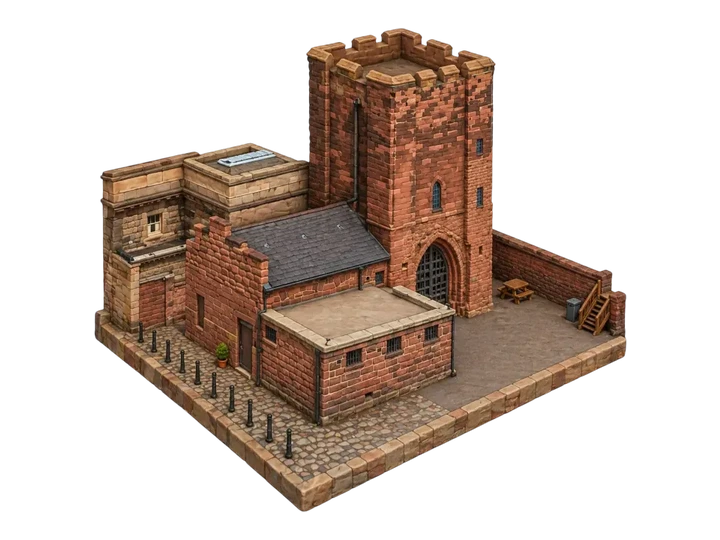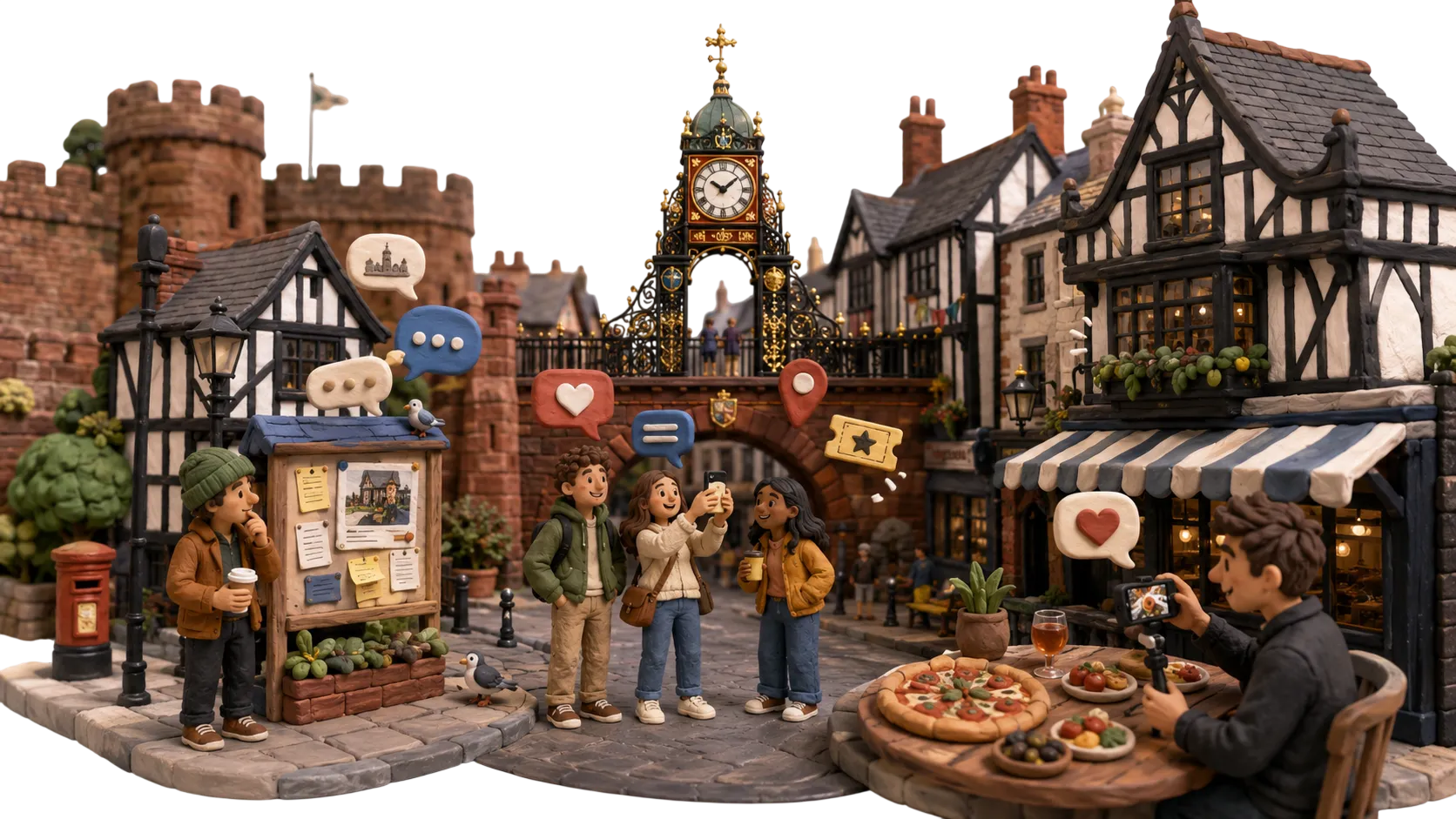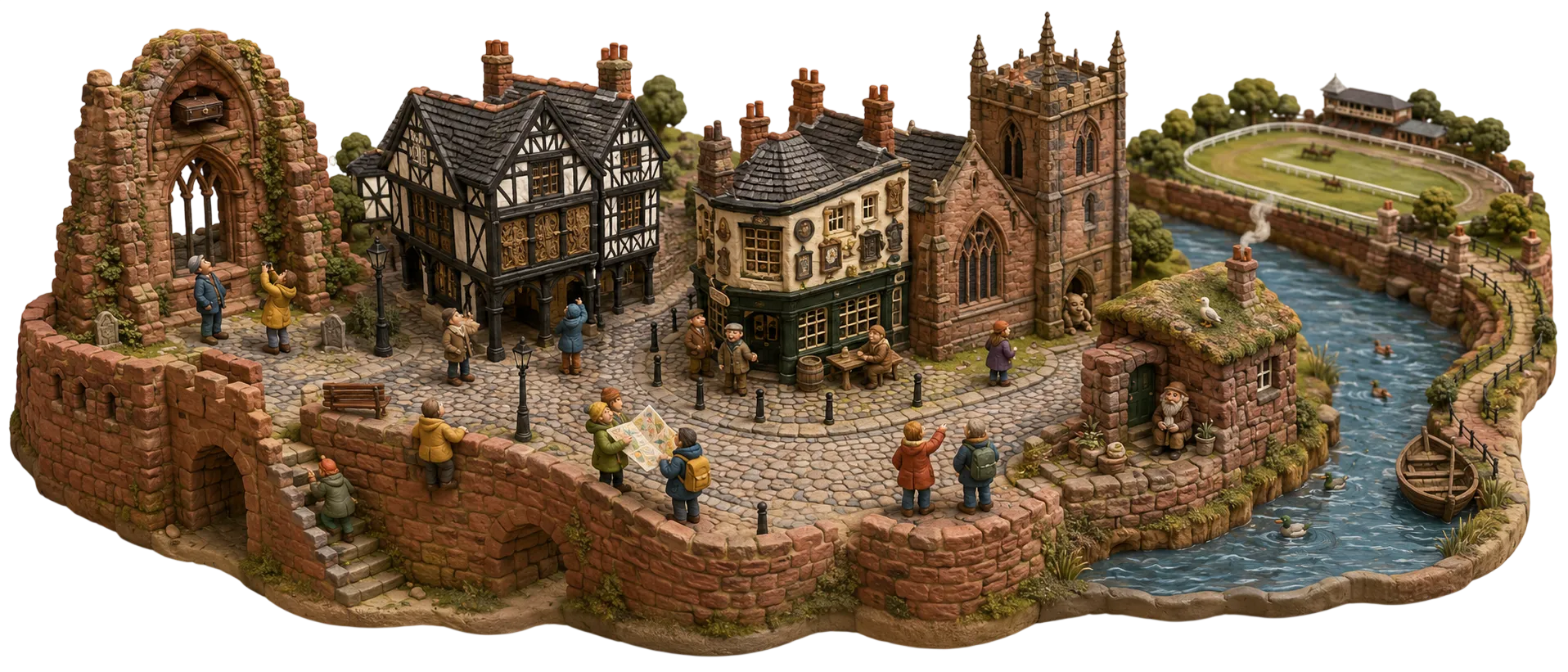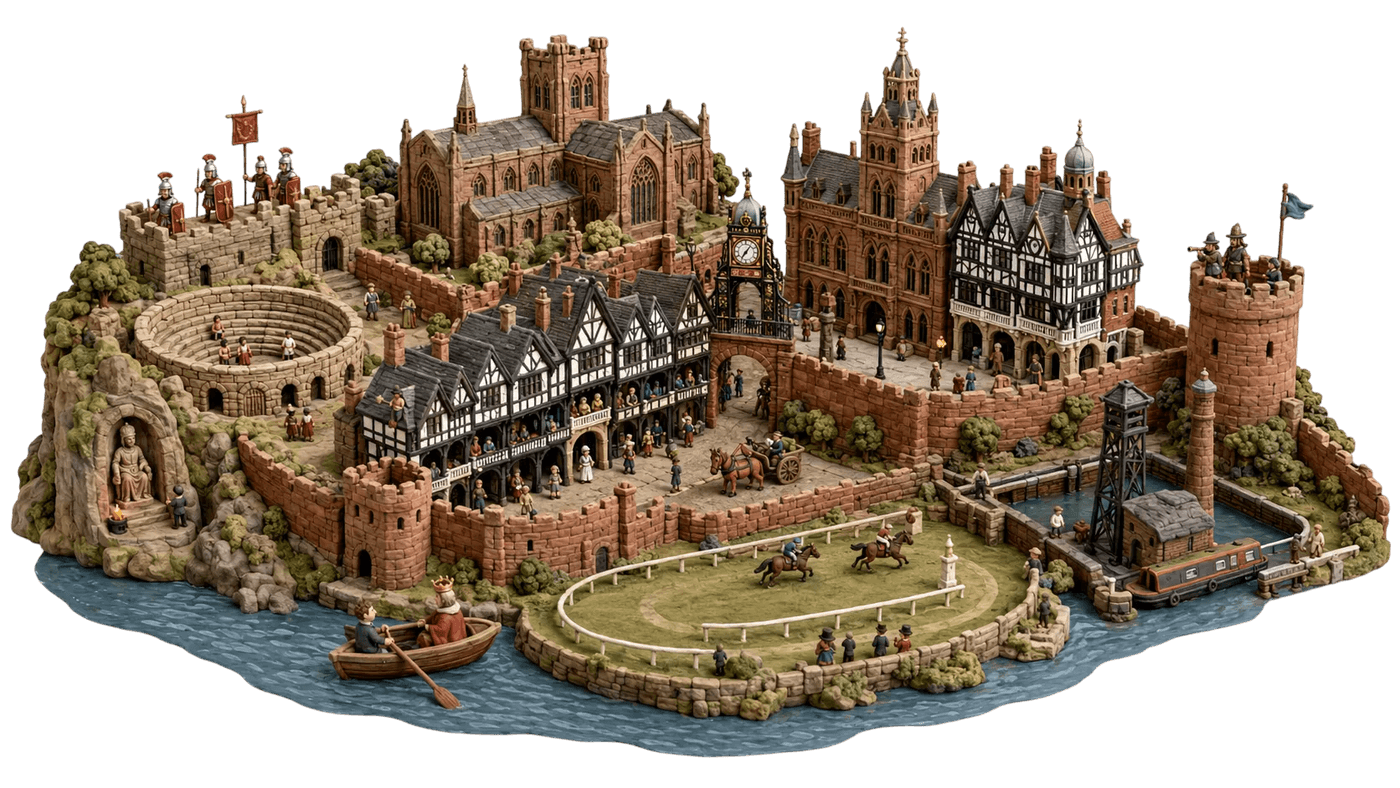
Take a breath. The Romans turned up in the AD 70s, built a fortress called Deva Victrix that was 20% bigger than the other ones and may have been intended as the provincial capital, put up Britain’s largest military amphitheatre, carved a shrine to Minerva into a cliff, garrisoned the Twentieth Legion for three centuries, then left in 410 and stopped writing. King Arthur supposedly fought his ninth battle here, the Welsh and the Saxons argued over the place for two hundred years, and in 616 Æthelfrith of Northumbria settled it with a sword. The Anglo-Saxons renamed it Legeceaster, then Ceaster, then Chester, getting tired as they went. St Werburgh’s body arrived in the ninth century fleeing Vikings and stayed. Alfred’s daughter Æthelflæd rebuilt the walls in 907. In 973 King Edgar made between six and eight subordinate kings row him up the Dee as a power move. The Normans demolished two hundred houses in 1066, installed Hugh d’Avranches — who reportedly preferred falconers to farmers — and started using Chester to raid Wales and Ireland; one of his successors helped capture a king of England, and in 1398 Richard II declared the place a principality, which on paper it sort of still is. The abbey founded in 1092 was dissolved by Henry VIII in 1540 and quietly reopened as the cathedral. The Rows, Chester’s medieval double-decker shopping streets, were already in place and already strange. The port shipped wine from Aquitaine and, on one 1543 manifest, six thousand three hundred badger skins, until the river silted and the ships moved downstream to Neston, then Parkgate, then Hoylake, then gave up entirely and went to Liverpool, which Chester has not forgotten. The old Roman harbour silted into the Roodee, which became Britain’s oldest still-running racecourse. In the Civil War the city refused to surrender nine times, ate its own dogs, watched Charles I lose the Battle of Rowton Heath from the Phoenix Tower, and finally gave up in 1646; the plague then killed two thousand of the survivors, because 1646 wasn’t finished with Chester. The Georgians turned the city into a polite retreat for rich people fleeing the smoke of Manchester and Liverpool. Edmond Halley briefly ran the Castle. The Industrial Revolution brought a canal officially nicknamed “England’s first unsuccessful canal”, a railway bridge that fell down and changed national engineering standards, the country’s oldest surviving shot tower, and a Venetian-Gothic town hall opened by the future Edward VII. The Victorians, led by the architect John Douglas, decided the city wasn’t medieval enough and rebuilt large chunks of it in black-and-white half-timber to look as though it always had been. The Eastgate Clock went up in 1899. The Luftwaffe largely went to Liverpool instead. The Grosvenor Precinct happened in the 1970s and is still being argued about.
And here we are.