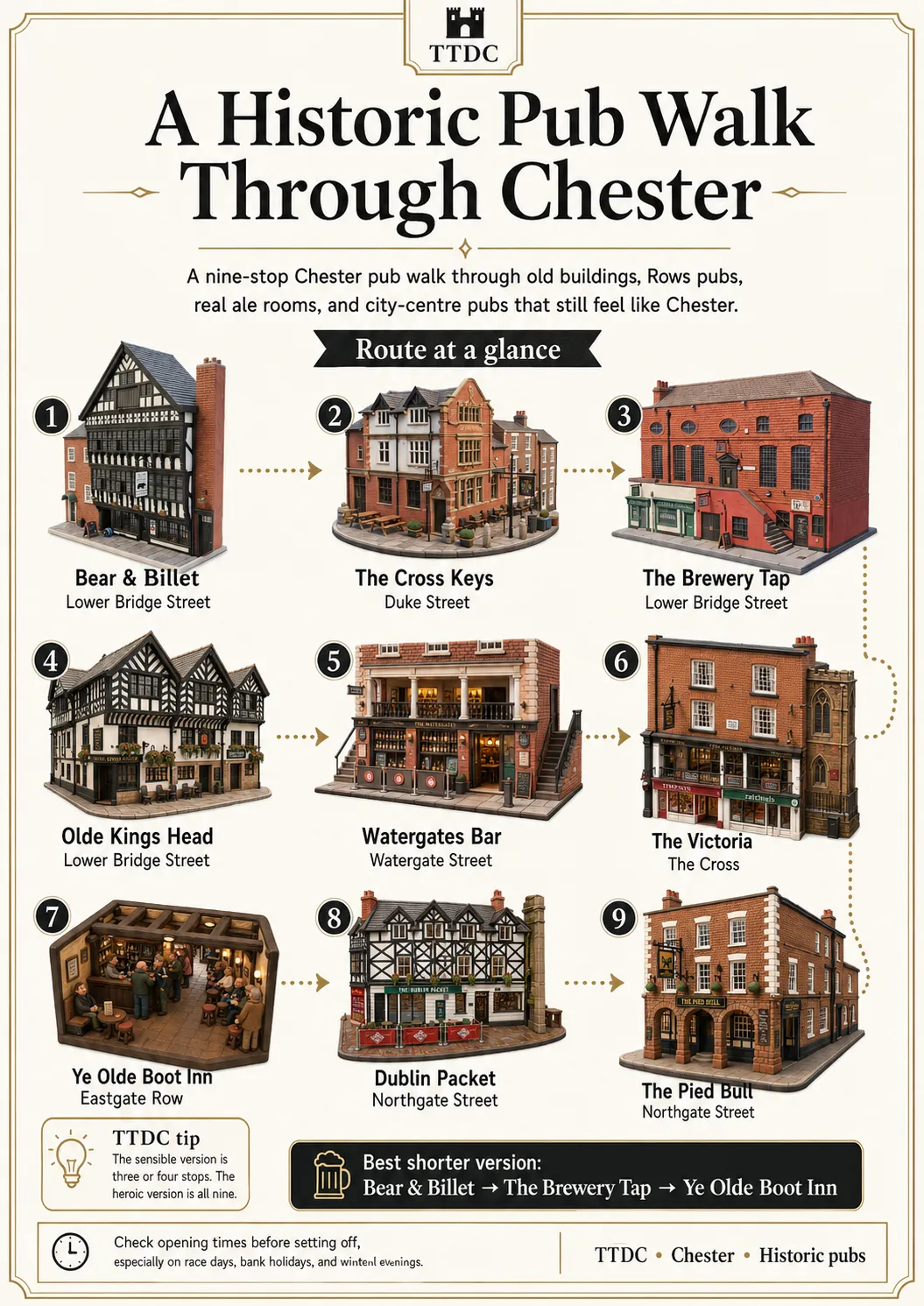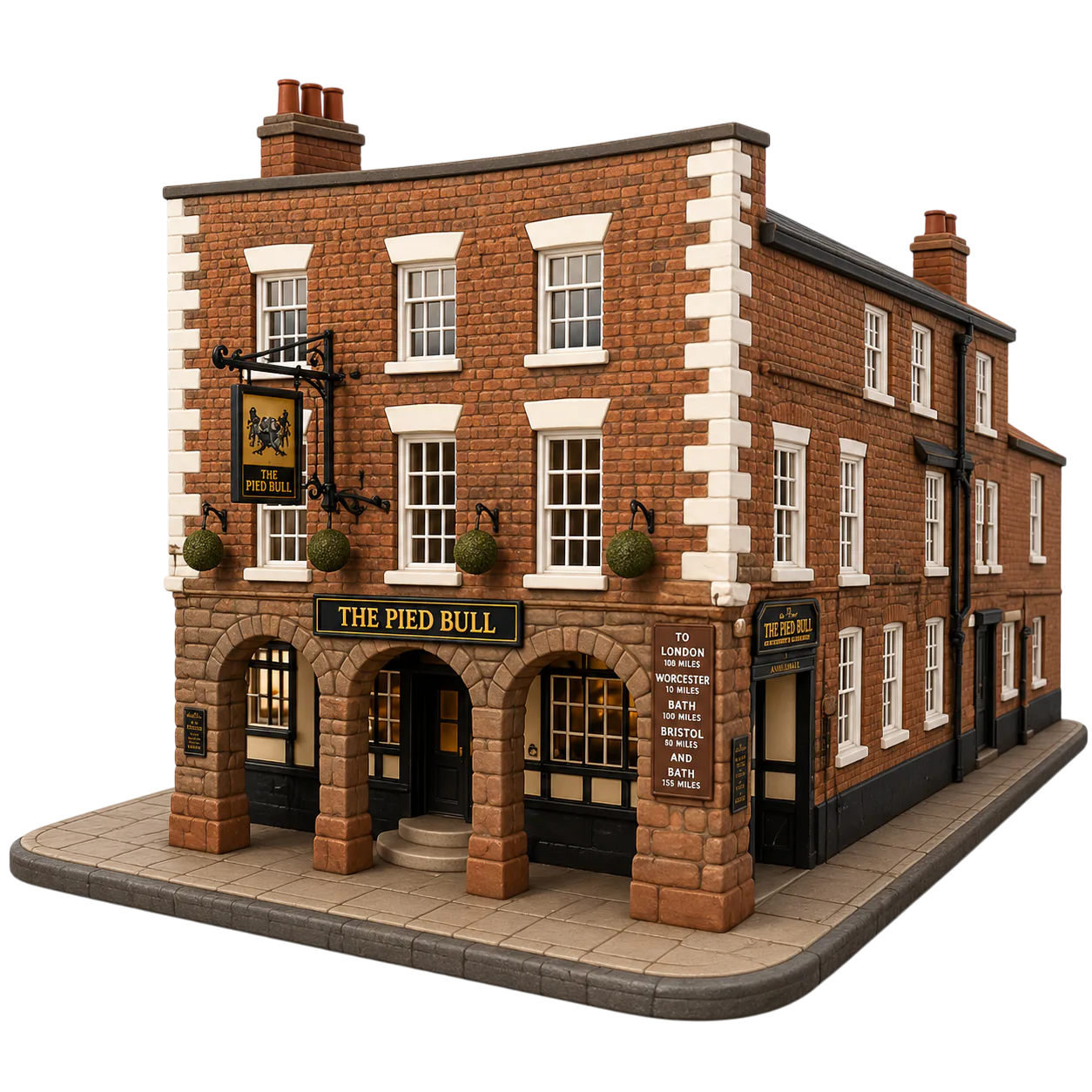
The Pied Bull is the best-known answer to “what is the oldest pub in Chester?”, but it is not a clean argument.
Chester has several pubs that claim to be the oldest. This is exactly the sort of sentence that sounds simple until you put it near Chester, at which point it immediately becomes medieval, disputed, timber-framed, partially rebuilt, probably on the site of something else, and slightly damp.
The short answer is this: there is no single, clean, uncontested oldest pub in Chester.
There are several strong claimants. They are all old. Some are old as buildings. Some are old as pubs. Some are old as inns. Some are old as stories. Some are old in the same way your uncle’s “original Beatles vinyl” is old, despite several replacement sleeves and a suspiciously fresh price sticker.
The honest answer depends on what you mean by “oldest”.
The quick version
If you want the neat answer, The Pied Bull has the best-known claim to being Chester’s oldest inn.
If you want the oldest building with a serious pub-history connection, The Falcon and The Old King’s Head come into the argument.
If you want the cleanest “proper old pub” date, Ye Olde Boot Inn has a very good case.
If you want the boldest claim, The Victoria would like a word.
If you want the building that most looks like it should win by sheer wonkiness, The Bear & Billet is standing there in black and white timber, quietly judging everyone.
Nobody gets the crown without an asterisk. Which is frustrating, but also quite satisfying.
Very Chester.
The problem with “oldest pub”
The phrase “oldest pub” sounds as though it should have a clear winner. It does not.
There are at least five different questions hiding inside it.
Do you mean the oldest building that is now a pub? The pub that has been serving drink for the longest? The oldest coaching inn? The oldest licensed premises? The oldest surviving pub name? The oldest bit of timber someone has pointed at while saying, “that beam is older than America”?
These are not the same thing.
A medieval town house can later become a pub. An inn can stand on an older site but have a much later building. A pub can have a strong 17th-century date, while another building nearby has 12th-century masonry but was not originally a pub at all.
And Chester, because it cannot help itself, has examples of all of this.
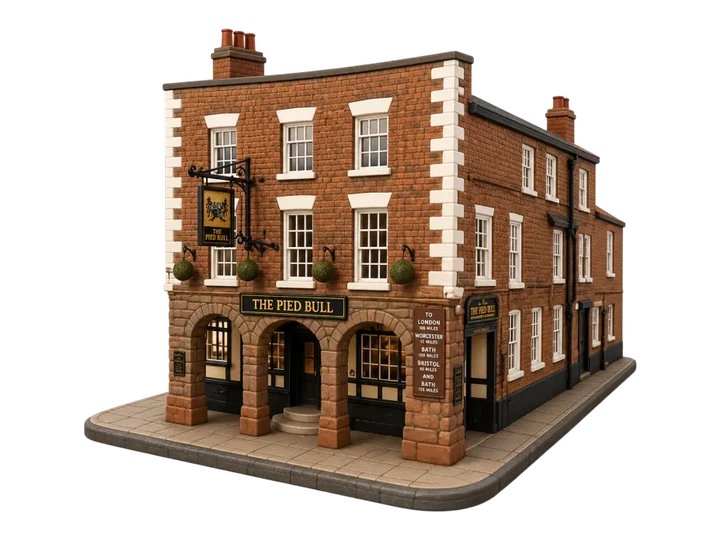
The Pied Bull: the famous oldest-inn claim
The Pied Bull is probably the one most people will name first.
It has the big headline claim: it is often described as Chester’s oldest coaching inn, sometimes dated back to 1155. It sits on Northgate Street, looks suitably ancient in parts, and has the sort of pub-hotel history that feels very plausible in a city built for travellers, traders, soldiers, judges, and people who needed ale before anyone had invented a flat white.
But the wording matters.
The Pied Bull is usually described as reputed to be the oldest coaching inn in Chester. That is not quite the same as “case closed, everyone go home”.
Historic England is more cautious about the building itself. The official listing describes The Pied Bull as a 17th-century inn, probably on the site of two medieval tenements. In other words, there may well be a much older story attached to the site, but the surviving building evidence is not simply “this pub has been here unchanged since the 1100s”.
That does not make the claim rubbish. It just makes it Chester.
The Pied Bull probably has the strongest broad claim if you are talking about Chester’s oldest surviving inn tradition. It is the pub to beat in the public imagination. But the 1155 date needs handling with tongs. Preferably old tongs. Possibly from a coaching inn.
The Pied Bull — The obvious starting point for the oldest-inn argument, especially if you want the claim and a pint in the same place.
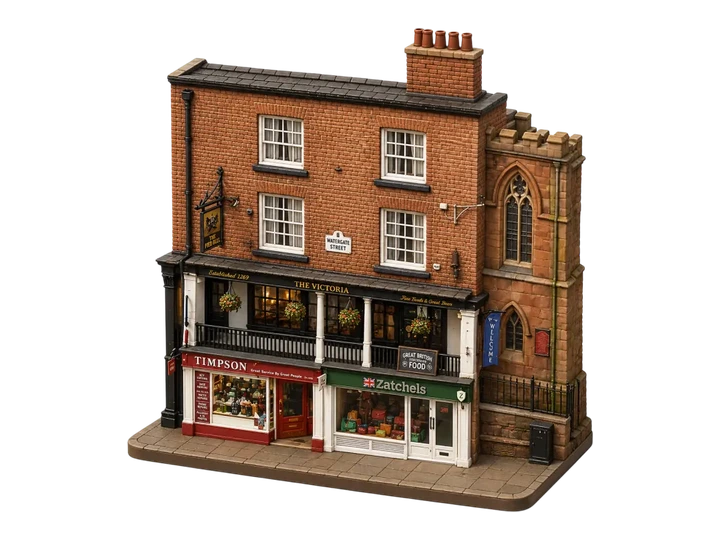
The Victoria: the boldest claim in the room
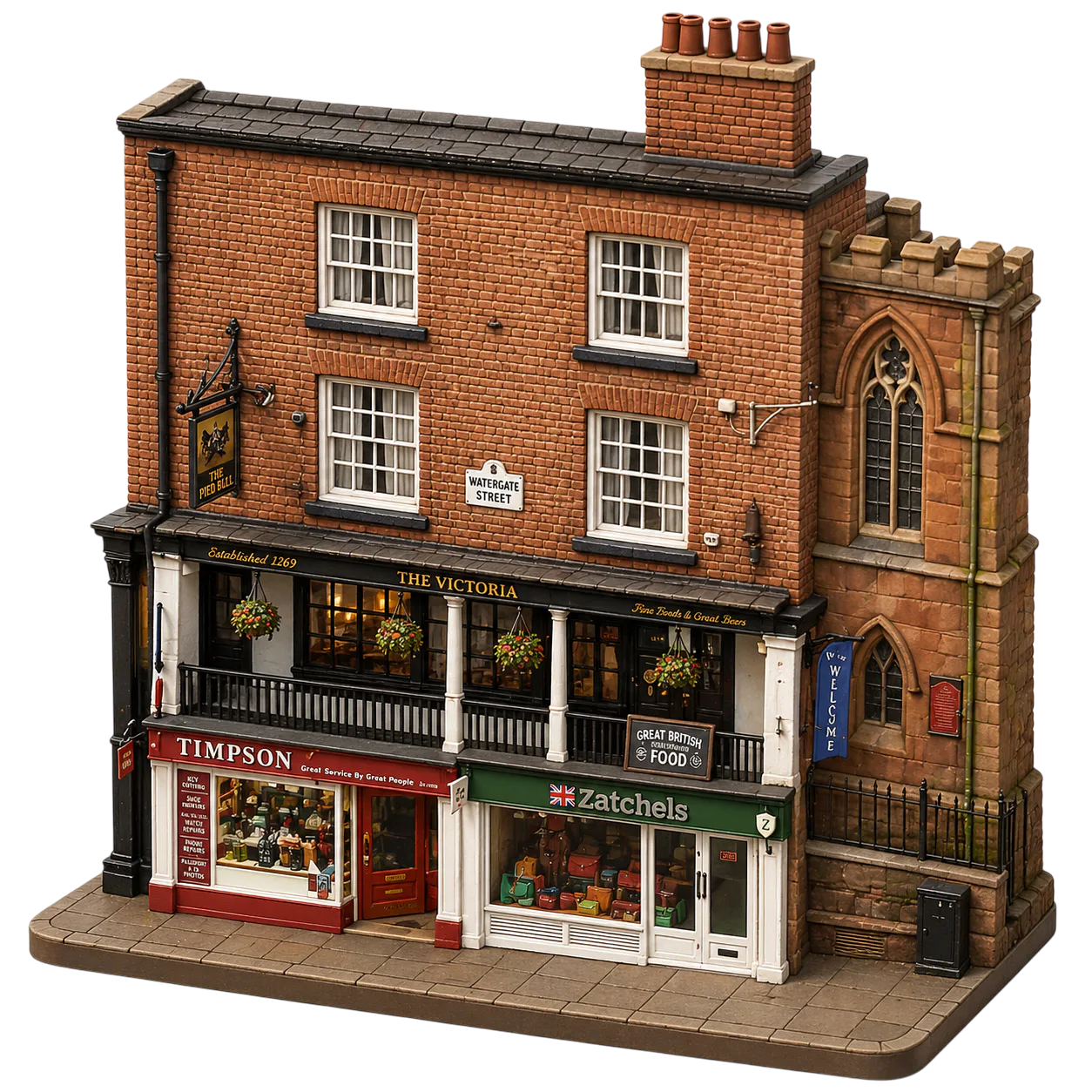
The Victoria is where the argument becomes more fun and more dangerous.
It sits up on Watergate Row, looking down towards The Cross, in one of the most Chester positions imaginable. You are not just in a pub there. You are in a pub above a street, beside a church, near the Roman heart of the city, with several centuries of building history doing complicated things around your pint.
The claim often attached to The Victoria is dramatic: that the property first became a pub in 1269.
That is a very good pub claim. It is also exactly the kind of claim that makes a cautious local guide put down its drink and start looking for the actual evidence.
The official listed-building record is more measured. It describes two undercrofts and town houses, now with shops below and The Victoria at Row level and above. The undercrofts are probably medieval, with a 17th-century timber-framed upper structure later clad in brick.
That is still old. Very old. Proper Chester old. But it is not the same as proving continuous pub use from 1269.
The Victoria absolutely belongs in the argument. It may even have the boldest claim of the lot. But bold is not the same as proven, no matter how low the beams are.
The Victoria — Useful for the 1269 claim, Row-level weirdness and a very Chester argument over one drink.
The Falcon: very old building, less useful pub
The Falcon has one of the best old-building claims in Chester.
The building has fabric dating back to around 1180 and began as a medieval town house. That is not “old pub” old. That is “mind your head, this wall has seen the Plantagenets” old.
But it was not originally a pub. That is the awkward bit.
The Falcon’s later life as an inn, cocoa house, and pub came much later. So if the question is “which pub is in one of Chester’s oldest buildings?”, The Falcon is a serious contender. If the question is “which Chester pub has been a pub the longest?”, it has a weaker case.
It is also currently closed, which is inconvenient for anyone hoping to settle the argument with a pint.
Still, it proves the central problem perfectly. Chester has old buildings that became pubs, and old pubs in buildings that have changed, and old claims attached to old sites. The Falcon is not the answer, but it is absolutely part of the reason the answer is complicated.
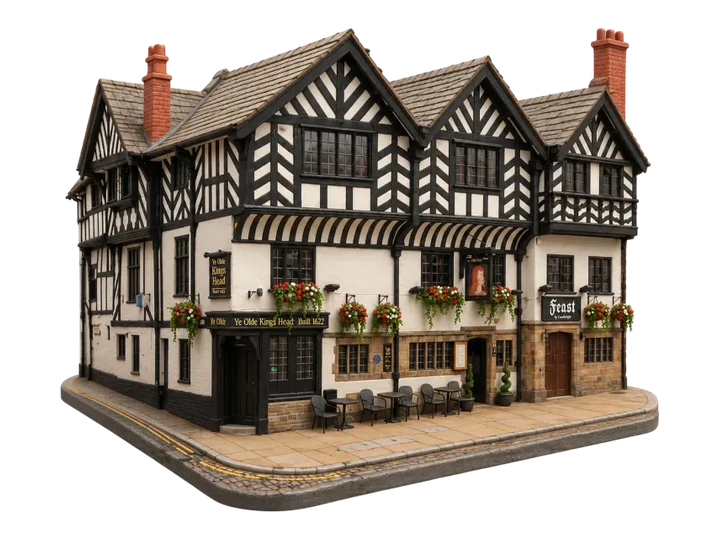
The Old King’s Head: ancient bones, later pub life
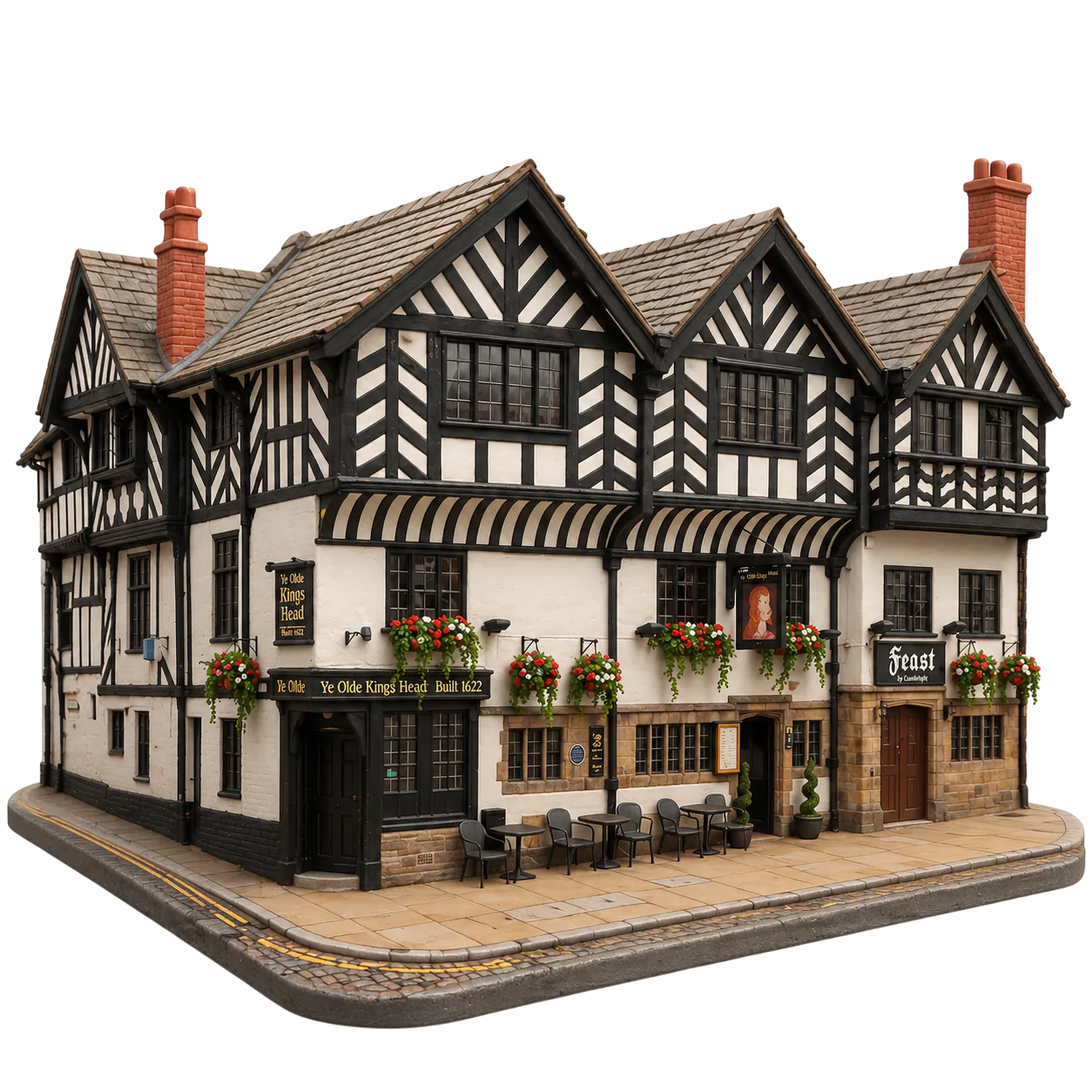
The Old King’s Head on Lower Bridge Street is another classic Chester problem.
The building is very old. Historic England describes it as a town house with undercroft at street level, now hotel, dating to around 1208. That puts it right in the thick of the medieval-building argument.
But again, the oldest part of the story is not straightforwardly “pub”. It began as a town house. Its later use as an inn, hotel, or public house comes afterwards.
The Old King’s Head is still worth including on any historic Chester pub route. It has the location, the age, the wonky atmosphere, and the Lower Bridge Street credentials. But as with The Falcon, the more precise verdict is: ancient building, later pub. Less catchy than “oldest pub in Chester”, which is why it tends not to appear on the sign.
The Old King's Head — Lower Bridge Street, medieval bones, later inn life and a good reminder that building age and pub age are not the same thing.
Ye Olde Boot Inn: the cleanest old-pub candidate
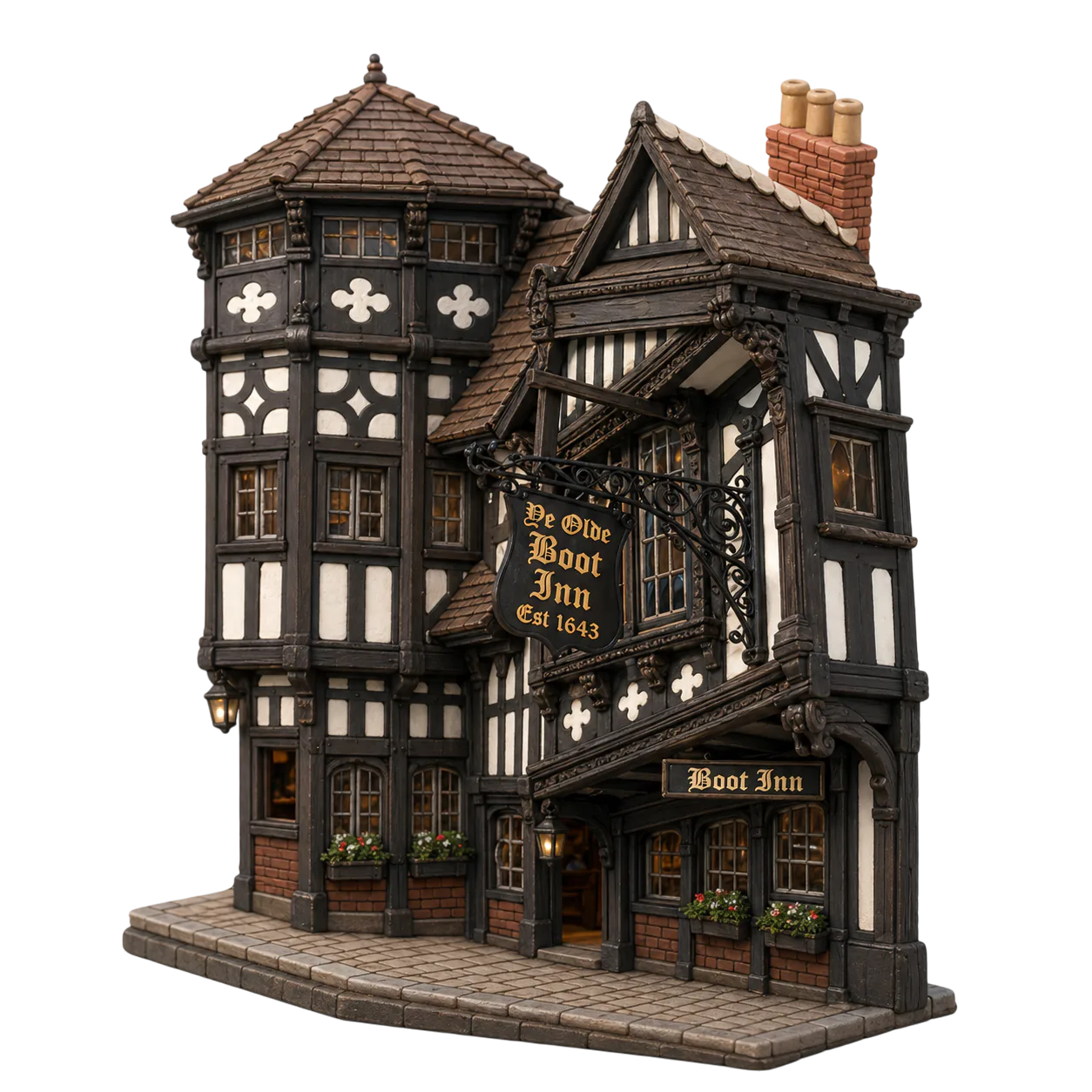
Ye Olde Boot Inn might have the most satisfying claim for anyone who wants a proper old pub, rather than a courtroom debate about undercrofts.
It sits on Eastgate Row, tucked away in a way that feels pleasingly inconvenient. You have to know it is there, or at least be willing to climb the steps and trust Chester’s strange upstairs logic.
The Boot is commonly dated to 1643 as an inn. It has beams, a small-room feel, Sam Smith’s austerity, and the general atmosphere of somewhere that has never once asked whether you would like to scan a QR code.
It may not beat The Falcon or Old King’s Head for the age of the building. It may not beat The Pied Bull for headline oldest-inn mythology. It may not have The Victoria’s dramatic 1269 claim. But as a clean answer to “which Chester pub is properly old and has a credible old-pub date?”, Ye Olde Boot Inn is very strong.
This is the sort of pub where the argument feels less theoretical. It looks like an old pub, behaves like an old pub, and gives the impression that if you ask too many questions about soft furnishings it may ask you to leave.
Possibly the best answer if what you really mean is: an old pub that still feels like an old pub.
Ye Olde Boot Inn — The cleanest old-pub-feel candidate: Eastgate Row, low beams, quiet rooms and very little modern fuss.
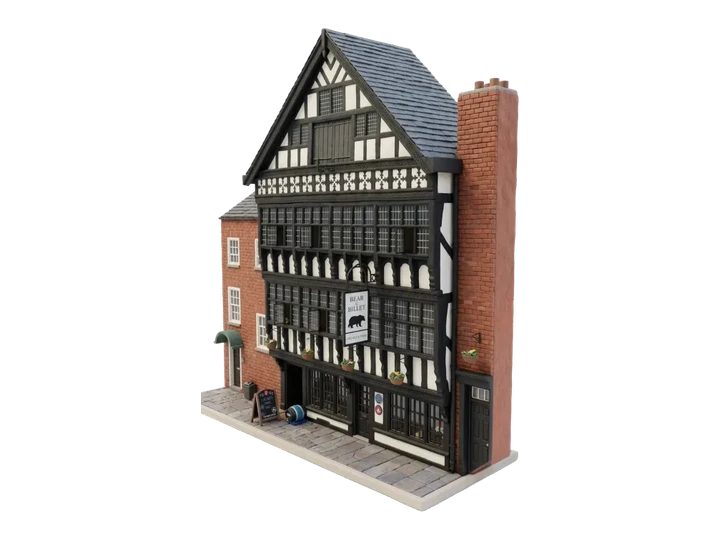
The Bear & Billet: looks like it should win
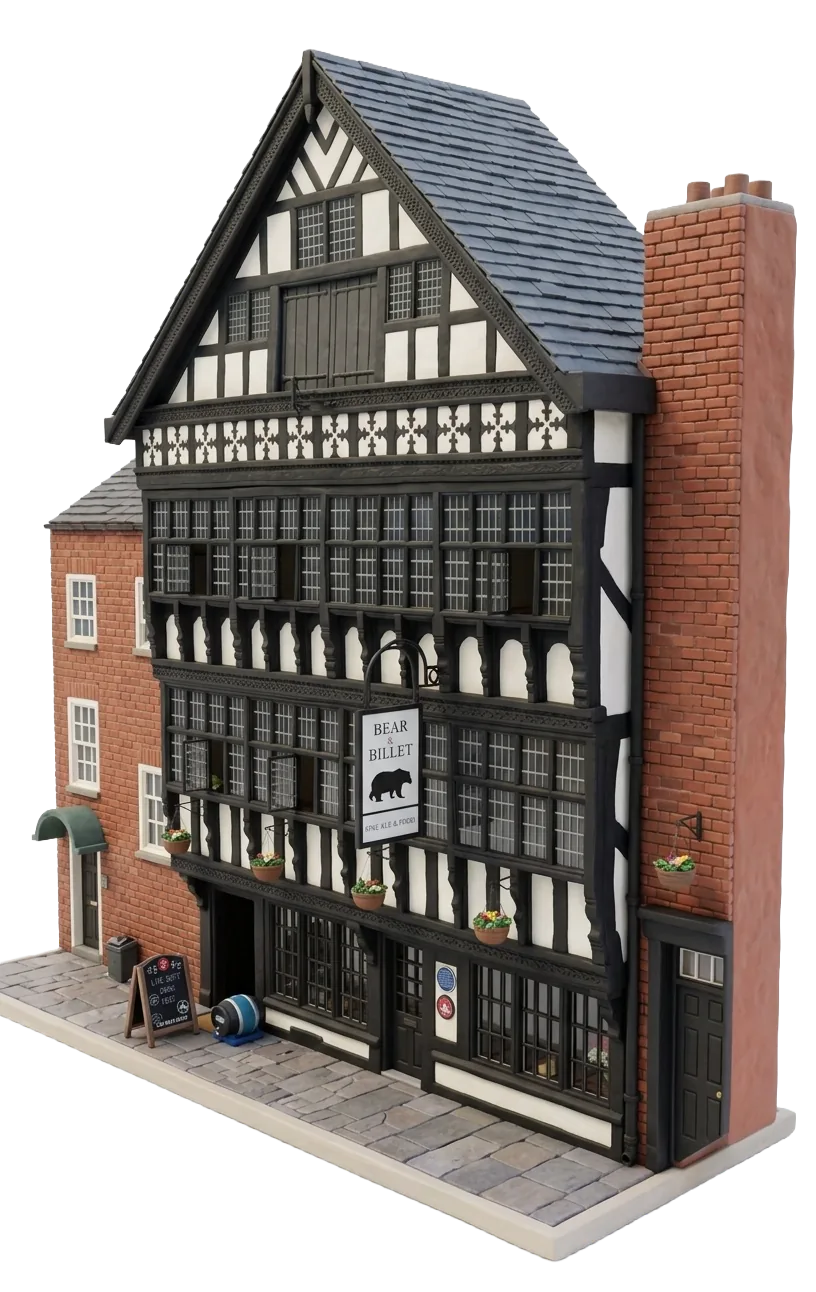
The Bear & Billet is not the oldest pub in Chester.
It is important to say this early, because visually it behaves as though it is.
It stands on Lower Bridge Street with full timber-framed confidence, looking like the sort of building that would be played by itself in a drama about plague, ale, and difficult inheritance disputes.
Historic England dates it to 1664, built as a town house for the Earl of Shrewsbury before later becoming a public house. That makes it old, important, and absolutely worth a visit. It also makes it a slightly weaker “oldest pub” candidate than its appearance suggests.
The Bear & Billet is the pub-history equivalent of turning up to court in an excellent suit but with slightly less evidence than you hoped.
Bear & Billet — Not the oldest, but one of Chester's most convincing historic-pub buildings to look at from the street.
So, which one is actually oldest?
There is no clean winner. Sorry. You came for certainty and got Chester.
But here is a useful way to break it down:
Oldest inn claim: The Pied Bull probably has the strongest headline case, though the 1155 date should be treated carefully.
Boldest pub claim: The Victoria, with its dramatic 1269 claim - but the official building evidence is more cautious.
Oldest building now linked to pub use: The Falcon and The Old King’s Head, though both began as town houses rather than pubs.
Cleanest old-pub date: Ye Olde Boot Inn, with its 1643 inn date and properly old-pub atmosphere.
Best-looking historic pub building: The Bear & Billet. Not the oldest, but try telling it that.
If someone asks what Chester’s oldest pub is, the safest reply is: it depends what you mean, but The Pied Bull, The Victoria, Ye Olde Boot Inn, The Falcon, The Old King’s Head and The Bear & Billet all have a case, and none of them gets away without an asterisk.
The best way to settle it
Do not settle it. That is the trick.
Start at The Pied Bull for the classic oldest-inn claim. Visit The Victoria for the 1269 argument and the pure Chester weirdness of drinking above the street beside St Peter’s. Go to Ye Olde Boot Inn for the cleanest old-pub feel. Look at The Falcon and The Old King’s Head for the older-building argument, though check what is actually open before building your evening around either of them. Finish at the Bear & Billet because it looks magnificent and will make you feel you have done your civic duty.
By the end, you may not know which pub is the oldest.
But you will understand why the question is so difficult.
And, more importantly, you will have been to some good pubs.